Showing posts with label Classic. Show all posts

Thursday, 13 August 2026

Goodbye to All That

Finished August 9
Goodbye to All That by Robert Graves

I've had this book for a while and picked it up to meet a reading challenge. This memoir was first published in 1929 and was very controversial for its honest portrayal of the realities of World War I and of the author's personal life. My copy has an epilogue from 1957 that gives an brief overview of his life since then. The epilogue had an interesting Canadian connection as he mentions an officer he'd met during the war was now a Canadian politician. It was just after this was written that Pearson became leader of the Liberal party and later, our 14th prime minister. 
Graves work talks about his early life and growing up in Wales, with influences from his father's Irish side of the family and his mother's German side of the family. The main portion of the book covers his World War I experiences, and they are written almost dispassionately, telling of the horrors of being on the front lines, the violence and conditions of war, and of the friendships formed. Graves had many friends who were also writers and poets, and one of them that appears repeatedly is Siegfried Sassoon, another officer who had some German ancestry. The realities of the war are sometimes hard to read, and unfathomable for me to understand how anyone could have lived through it without psychological damage. 
He also talks about his marriage to Nancy Nicholson, who he first met in April 1916 at a friend's house he visited and who he corresponded with after that. She was just sixteen at the time, and they married when she was eighteen and he was twenty-two. Nancy was an artist and an ardent feminist who wanted a full life. I was surprised to see what an equal marriage it was, with them sharing the parenting of their four children, and him doing the cooking for the household. They struggled financially, with his writing providing their main income. They did go to Cairo for a year where he taught at a university, but he didn't enjoy it and they didn't fit into the expatriate society well. He had both a brother and sister in Cairo at the time, and while they were welcoming, particularly his sister, they didn't have the same outlook on life. 
The title of the book represents his feeling at the end of the time he was writing about. When his marriage to Nancy ended, he left England and lived in Majorca (except for the years of World War II, where he did return to England)
I am really glad I read this book as it offers a glimpse into personal experiences at the time.

Saturday, 20 June 2026

Appointment in Samarra

Finished June 3
Appointment in Samarra by John O'Hara

This novel, written in 1934, is set in 1931, and was the first novel by O'Hara. It is considered a modern classic. The main character is Julien English, a manager of a Cadillac dealership in the town of Gibbsville, Pennsylvania. He has been married to his wife Caroline for five years, and has recently turned thirty. We know that he had a previous relationship, that wasn't public, with a Polish immigrant woman named Mary. 
Julien's father is a doctor in town and Julien has always been somewhat of a disappointment to his father, from his antics as a boy to his lack of ambition as a man. Julien and his wife are active socially, belonging to clubs and part of a friend group that parties regularly. It is the Christmas season and we see Julien begin a series of self-destructive incidents that compromise his friendships, his position in society, and even his marriage. They start with throwing a drink in the face of a friend and important business associate.
There are issues of mental health, infidelity, and economic difficulties as the Depression has begun in the country. We see things from Julien's perspective, but also from others such as his wife Caroline's, has salesman, and some of his friends. 
The title comes from an ancient Mesopotamian tale about a man who tries to escape death but can't. It speaks to the inevitability of Julien's self-destruction. 
An interesting psychological read. 

Saturday, 15 November 2025

Elizabeth's Dreams of Egypt

Finished November 11
Elizabeth's Dreams of Egypt by Cassie Miller

This novella is from an unnumbered series of books that reuse characters from the classic Pride and Prejudice in different settings, circumstances, etc. Here, the situation is that Jane has been kidnapped by Wickham, and the family is distressed. Darcy comes to Jane and she confesses what has her upset. As he attempts to trace them, he manages to be partially successful. 
Elizabeth, accompanied by her aunt, goes by ship with Darcy and Bingley to Egypt where the trail takes them. As the ship stops in various locations, Elizabeth enjoys the new experiences, but her focus remains on her sister.
This is a short book, with little explanation or detail, and no real inner thoughts included. Really just a mechanism for reusing the characters and parts of the original story. While I read the book to meet a challenge for a book set in Egypt, and there were some descriptions of historical sites, it feels dishonest to use it for that challenge, so I won't be.

Thursday, 6 February 2025

The House on Mango Street

Finished February 6
The House on Mango Street by Sandra Cisneros

The copy of this that I read is the 25th anniversary edition, which has a foreword by the author reflecting on the work, as well as where she is now. I think that it added a lot to what I felt as I read the book. 
The book has short chapters that are connected vignettes around the street in Chicago, where the girl narrator, Esperanza Cordero, lives, called Mango Street. The house she lives in is the first home that her family has of their own, not an apartment, that they can change as they wish to. She has siblings and extended family, friends and neighbours, who all appear in their own way in this book. 
Esperanza learns things, about herself, her community, and about life, especially about growing up. I'm glad that I finally took the time to read this short book, and see through the eyes of this observant young girl. 

Friday, 19 April 2024

My List for Classics Spin #37

Classics Club hosts a spin every once in a while challenging you to read a classic that is on your TBR list. 
I've done some in the past and decided to do this one. (#37)
Here's the link.

You list 20 books and then see what comes up in the spin and read the book for that number on your list. 

My list for the spin:
1.     Frankenstein by Mary Wollstonecraft Shelley
2.     Dracula by Bram Stoker
3.     A Tree Grows in Brooklyn by Betty Smith
4.     Great Expectations by Charles Dickens
5.     East of Eden by John Steinbeck
6.     Heart of Darkness by Joseph Conrad
7.     True Grit by Charles 
8.     Persuasion by Jane Austen
9.     Songs of Kabir by Kabir
10.    Roxana by Daniel Defoe
11.    The Sorrows of Young Werther by Goethe
12.    Roughing it in the Bush by Susanna Moodie
13.    Westward Ho! by Charles Kingsley
14.    Barchester Towers by Anthony Trollope
15.    The Mill on the Floss by George Eliot
16.    The Light Princess by George MacDonald
17.    Far From the Madding Crowd by Thomas Hardy
18.    Travels with a Donkey in the Cevennes by Robert Louis Stevenson
19.    Buddenbrooks by Thomas Mann
20.    Kim by Rudyard Kipling

Thursday, 6 July 2023

Letters to a Young Poet with the Letters to Rilke from the "Young Poet"

Finished June 28
Letters to a Young Poet with the Letters to Rilke from the "Young Poet" by Rainer Maria Rilke and Franz Xaver Kappus, translated by Damion Searls

This is a classic, paired with the other half of the correspondence that it was part of. The letters are written over several months and were an interlude in both the writer's lives, with no significant connection between them beyond this. One thing that struck me was the relative closeness in age between the two, although Rilke had already launched his career. Rilke's writing, even in this private correspondence (never published until after his death) was much superior to that of Kappus. Kappus definitely sounds like a fanboy, and his writing includes a lot of fawning and thanking. 
Rilke is patient, thoughtful, and diplomatic. His writing stands the test of time, and in some cases was ahead of its time. One selection from Letter Seven is a great example:

The girl, the woman, in this new manner of unfolding specific to her, will only transitionally imitate masculine ways of being, both good and bad, and follow the same male callings, do the same male jobs. After the uncertainty of these transitions has passed, it will be clear that women have passed through this multiplicity of (often ridiculous) disguises only to purify their own essential nature from the distorting influences of the other sex. Women, in whom life dwells and tarries more immediately, more intimately, more fruitfully, must surely have become fundamentally more mature, more human human beings, than the easygoing man, not pulled down beneath the surface of life by any difficult bodily fruit, who overhastily, arrogantly undervalues what he thinks he loves. This humanity of the woman, carried to term through pain and humiliation, will come to light once her outward position has changed and she has thrown off her conventional status as "only a woman'; the men today who don't see this coming will be baffled and shattered. Someday (and trustworthy portents of this are already speaking and shining, especially in the countries of the north) -- someday there will be a girl, a woman, who name no longer signifies merely the opposite of male but something in and of itself, existing, alive, implying no limit and requiring no complement--; the female human being.

As you can see from this passage, the letters convey not just advice particular to the recipient, but general life advice and commentary that will help any young person with their struggles, and put things in perspective for them. I can see why Rilke's letters are a classic.

Tuesday, 23 May 2023

Charles Bovary, Country Doctor

Finished May 22
Charles Bovary, Country Doctor: Portrait of a Simple Man by Jean Améry, translated by Adrian Nathan West

This book is a combination of novel and literary criticism, unlike any other book I've read. The book starts in the voice of Charles Bovary after the death of Emma, as he grieves and reflects. In this first section he interacts with other characters like Berthe, Homais and Lheureux, and for some of these he shows both sides of the conversation. He also addresses his late wife, and revisits past conversations. 
In the second section he revisits the past, scenes from the novel, where he relates his inner response to these and we see how it differs from the novel. He shows how Charles is made to be stupid and ridiculous, not a real person. 
The third section switches to essay format and is literary criticism of a sort, but focused on the author and how his experience relates to what he wrote, both in terms of inspiring and in terms of limiting. 
This essay form continues in the fourth section where the author focuses on Flaubert's view of the bourgeois and how that led him to make his characters fit that mold.
The fifth section takes us back to Charles Bovary and how a man of his time and experience would have acted and felt, as opposed to the way he is portrayed in Madame Bovary. 
The last section takes us back to the novelistic format, speaking as Charles as he accuses Flaubert of betraying his reality and as he experiences the loss of his wife, both over time as she pulled away from him and in the end with her final choice. 
This book was ahead of its time in how it looked at a classic novel and responded to it. While written in 1978, it has only recently been translated into English and allows the reader of the classic a new way of looking at Madame Bovary. It definitely addresses some of the issues that I had when I read it, and shows me good arguments for my reactions to the classic. 
A great addition to the field of literature. It also had me with a dictionary by my side to look up some of the less common terminology used. 


Friday, 18 March 2022

My List for Classic Spin #29

This list is due by Sunday March 20th, 2022, when the spin will happen and then the book it lands on has to be read by Sunday, April 30th, 2022. That gives those of us participating six weeks to read the book.


As always, the spin is hosted here

Here is my list of 20 books:

  1. War and Peace by Leo Tolstoy
  2. The Ides of March by Thornton Wilder
  3. Frankenstein by Mary Wollstonecraft Shelley
  4. Dracula by Bram Stoker
  5. The Phantom Tollbooth by Norton Juster
  6. A Tree Grows in Brooklyn by Betty Smith
  7. Persuasion by Jane Austen
  8. Buddenbrooks by Thomas Mann
  9. The Way We Live Now by Anthony Trollope
  10. Summer Will Show by Sylvia Townsend Warner
  11. The Return of the Soldier by Rebecca West
  12. Roxana by Daniel Defoe
  13. Sons and Lovers by D.H. Lawrence
  14. The Sorrows of Young Werther by Johann Wolfgang van Goethe
  15. Lord Jim by Joseph Conrad
  16. Great Expectations by Charles Dickens
  17. The Dead Girls' Class Trip by Anna Seghers
  18. Mrs. Palfrey at the Claremont by Elizabeth Taylor
  19. Between the Woods and the Water by Patrick Leigh Fermor
  20. Alberta and Jacob by Cora Sandel

 This includes some short ones, some long ones, and some I've struggled with before.


Sunday, 19 December 2021

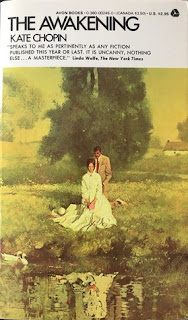
The Awakening

Finished December 12
The Awakening by Kate Chopin

This is a very languid read, and very much about the central character and her reactions to her situation. Edna Pontellier is a young woman, married to a Louisiana businessman somewhat older than them. They have two young sons, and have a domestic who looks after them. 
Edna is not a natural mother, and while she spends time with her children, she doesn't dote on them or worry over them. 
This is their first summer that she has spent on Grand Isle, a resort community not far from New Orleans. Her husband joins her on weekends as do most of the other husbands, and she spends the week with the other wives, her children, and one of the sons of the resort owner who is of a similar age to her. His name is Robert Lebrun, and Mr. Pontellier is aware of the attentions paid by him to his wife, but does not worry over it. Robert does this with a young woman every summer, and it is generally attention with mild flirting.
But this attention awakens something in Edna, and she reacts in an unexpected way. She grew up in Mississippi and Kentucky on her father's plantation and led a sheltered existence. This new experience has left her unsettled, longing for something else in her life, and dissatisfied with her luxurious lifestyle. As she ventures away from expected behaviours, her husband makes moves to save face, and reaches out to her, but she seems to not realize her situation.
This is a sad novel, one where I wished I could change the course of what I could see developing. 

Monday, 6 December 2021

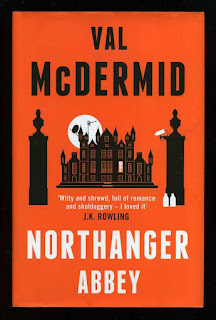
Northanger Abbey

Finished December 6 
Northanger Abbey by Val McDermid

This book is part of a series of novels that are retellings of Jane Austen books known as The Austen Project. Here we have 17-year-old Catherine (Cat) Morland of the Piddle Valley in Dorset, accompanying neighbours Mr. and Mrs. Allen to Edinburgh for the Festival. She is excited to visit the city and take part in the various cultural events. Mr. Allen is an investor in cultural projects in London and evaluating the productions for potential. Mrs. Allen is both accompanying her husband, and shopping, and Cat is the recipient of some shopping largesse. 
They get invited to the Edinburgh Ball, and Cat is able to get a spot in a one-day session learning the various country dances. She is paired with local Henry Tilney, and finds herself falling for him. They also run into one of Mrs. Allen's old school friends, and her three daughters, one of whom, Bella, claims Cat for a friend. They also apparently know Cat's older brother James, as he went to school with their brother John. When the two young men also arrive, Cat finds herself torn between accompanying them and Bella on outings, and spending time with Henry and his sister Ellie. 
When General Tilney, Henry and Ellie's father invites her to their home at remote Northanger Abbey, Cat finds herself both excited and falling prey to her overactive imagination.
A fan of paranormal fantasy, and introduced to a Scottish writer of a series new to her, she finds herself imagining vampires, prisoners in old towers, and other such fantasies. 
This was an interesting modern-day take on the plot of Austen's novel, and a fun read. Including social media, texting, and modern cultural figures added another element to the plot. 
I'd read Sense and Sensibility by Joanna Trollope, another in the series and enjoyed it, and have enjoyed Val McDermid's novels as well, so was interested to see what she'd make of this challenge. 

Saturday, 16 October 2021

Classic Spin #28: My Books

I'm participating in the Classic Spin again. 


It's site is here. 

I have to choose 20 classic books that I want to read and on October 17th, a number between 1 and 20 will be picked and that is the book that I will have to read by December 12th of this year.
Edited on October 18th to say that the spin was for #12, so I will be reading The Awakening by Kate Chopin.

Here are my books:

1. To the Lighthouse by Virginia Wolff
2. The Sound and the Fury by William Faulkner
3. Dracula by Bram Stoker
4. Buddenbrooks by Thomas Mann
5. Frankenstein by Mary Wollstonecraft Shelley
6. Lord Jim by Joseph Conrad
7. Kim by Rudyard Kipling
8. A Tree Grows in Brooklyn by Betty Smith
9. A Farewell to Arms by Ernest Hemingway
10. The Phantom Tollbooth by Norton Juster
11. The Swiss Family Robinson by Johann David Wyss
12. The Awakening by Kate Chopin
13. The Way We Live Now by Anthony Trollope
14. Sons and Lovers by D.H. Lawrence
15. Persuasion by Jane Austen
16. The Sorrows of Young Werther by Johann Wolfgang van Goethe
17. Summer Will Show by Sylvia Townsend Warner
18. Roxana by Daniel Defoe
19. Howards End by E.M Forster
20. The Return of the Soldier by Rebecca West

Saturday, 30 January 2021

Madame Bovary

Finished January 28
Madame Bovary by Gustave Flaubert, translated by Mildred Marmur, foreword by Mary McCarthy


I read this as the choice for the Classic Spin #25 that was due to be completed on January 30th. The back cover of my copy describes it as "possibly the most beautifully written book ever composed...a book that invites superlatives...the most important novel of the century." I cannot agree. It was not an easy read, and I found that none of the characters were ones that I could like. I think there are other novels of the 19th century that I enjoyed more than this one. Any Jane Austen would be preferable to me.
I did enjoy Mary McCarthy's foreword, and it gave me some useful context for the read.
It was an interesting study though. Emma Bovary is definitely a narcissist. She really has no empathy for anyone else, not even her child, and doesn't care what the effects of her behaviour on others are. She wants what she wants and she feels she deserves it. 
Charles is weak in character and not very bright. His mother is aware of his failings and tries to organize his life as best she can, but once his first wife dies, and he has already met Emma, he is beyond that control. He falls for Emma and never questions her fidelity, even when everyone around them knows of her affairs. He trusts her with his money and never questions her on her purchases. He moves house and practice for her so she has a better atmosphere to live in, a new start, after she becomes depressed with her lot in life after an invitation where she experiences a livelier social life and more luxurious surroundings. He gives in to the pressure of her and the pharmacist Homais who want to be associated with a successful experimental surgery, never considering the patient's real wishes, or his own abilities. 
Emma falls easily for the flattery of her lovers, particularly her first one, who is experiences at this sort of thing. And she falls for the promises of the moneylenders, who know what they are doing, and try to hide their connection to the public result, but delight in their profits. She digs herself deeper again and again, and sinks to considering criminal acts to cover for herself. 
Even after Charles finds proof of her disloyalty and must deal with the financial implications, his feelings for her do not change, and their child suffers the most. 
I'm glad I've read it, but for me it is not a book I will reread.

Wednesday, 18 November 2020

My Books for Classic Spin #25

 I was successful in knocking off a classic that had been on my shelf for years when I did the last Classic Spin, so I'm definitely up for another one. 

Here's the challenge host post for Classics Club Spin 25

Here is my list of books.
1. Gone with the Wind by Margaret Mitchell
2. The Sound and the Fury by William Faulkner
3. The Way We Live Now by Anthony Trollope
4. The Water Babies by Charles Kingsley
5. David Copperfield by Charles Dickens
6. Sons and Lovers by D.H. Lawrence
7. Roxana by Daniel Defoe
8. Remembrance of Things Past 1 by Marcel Proust
9. Anna Karenina by Leo Tolstoy
10. The Phantom Tollbooth by Norton Juster
11. The Swiss Family Robinson by Johann David Wyss
12. A Tree Grows in Brooklyn by Betty Smith
13. Great Expectations by Charles Dickens
14. Madame Bovary by Gustav Flaubert
15. Dracula by Bram Stoker
16. Persuasion by Jane Austen
17. The Cretan Runner by George Psychoundakis
18. The Deptford Trilogy by Robertson Davies
19. Seven Gothic Tales by Isak Dinesen
20. Fire from Heaven by Mary Renault

Some are definitely more of a challenge than others!


Saturday, 14 November 2020

The Grass Is Singing

Finished November 13 
The Grass Is Singing by Doris Lessing


This novel was one I was due to read with my book club this year, but plans changed. I decided to read it anyway since I had it on my shelves. 
To me this reads as a tragedy. The main character here Mary, grew up in South Africa and Rhodesia, moving around to different stations with her parents. Theirs was not a happy marriage, and Mary escaped to the city young, and became an office worker. Her emotional growth was a bit stunted, never leaving the phase of innocent teenage flirting. She was good at her job, and it was only when she overheard gossip about herself that she became dissatisfied with her life and began to look to marriage as a solution. 
Her impetuous marriage to a veldt farmer in Rhodesia was not the solution she needed, but it is where she found herself. 
We know from the beginning of the book her end, there on the farm, through an act of violence. The book takes us through how she got to that place, the various people that had a role in that life, from her husband Dick to their closest neighbour and the black workers that were on the farm.
This is an immensely sad book, and one mourns the forces that took these characters on this journey. Mental health is definitely one of them as we see the deterioration in both Mary and Dick through their time together. 
So well written, but so so sad.
Language warning: First published in 1950, this book uses racial terms that are not acceptable now.

Wednesday, 30 September 2020

Catch-22

Finished September 28
Catch-22 by Joseph Heller

I've owned this book for years, but picked it up for the Classic Challenge. I'm glad to get it crossed off the list and portions of it hit home, but overall I can't say that I enjoyed it. My version of it had a new preface by the author, where he talked about his intentions compared to things some critics have said about the book.
The main character in the book is Yossarian, who is a bombardier in the American military during World War II, now stationed in Italy. He has legitimate worries about his survival, and is frustrated with his superior officer's habit of continually raising the number of missions the crews have to do before getting leave back home.
There is a lot here around the bureaucracy of the military, and of governments in general. Whether it is someone who was on a flight manifest for a flight that crashed, and is therefore declared dead, even though he tries to argue that he is right there, or a man who had barely arrived in camp, just dropping off his stuff in his tent before going out on a mission, never to return, and therefore is in limbo. Never formally arrived, so can't be formally declared dead. There are many instances of this sort of thing happening that show the frustration felt by those controlled by the bureaucracy.
There is also a theme around the image of the senior officers, competing for approval from their superiors, for promotion, or for favourable media coverage. Their decisions aren't made for the benefit of the men, or even the strategic military goals, but for personal reasons.
Another theme that really got me angry, as I'm sure it was meant to, was the theme around financial gain. One man, starting out as the chef in the canteen, kept advancing his activity around procurement, making money off trading goods of various types. The situation kept escalating and got to a point where the collateral damage of men's lives, civilian lives, and even battles with the enemy didn't matter at all, as long as money was being made.
The catch-22 of the title alludes to the idea that if you are able to claim to be unfit due to being crazy, then you aren't actually crazy.
As Yossarian watches more and more of the original group of men he works with get killed or injured, or simply disappear, he becomes more and more mired in his hopelessness and fear for his own survival, acting out however he can to protest the situation.

Wednesday, 5 August 2020

Maria Chapdelaine

Finished August 1
Maria Chapdelaine: A Romance of French Canada by Louis Hémon, translated by Andrew MacPhail, illustrations by M.A. Suzor-Cote

This classic Canadian story is one that I've meant to read for a while, and part of the reason I chose it for my book club July pick. The copy I've got is quite an old one, with interesting illustrations scattered through it.
Maria Chapdelaine is the oldest daughter in her family. She has mostly brothers, and one much younger sister, Alma Rose.
Her father Samuel is a man who is more of a settler than a farmer. He has cleared land, and created a homestead before, but then felt the urge to move to a less settled area and start again. His wife has recognized and accepted this about him, though she would like to be closer to a parish. Maria is at the age when young women of her time and situation considered marriage, and as the book moves on, we see that there are three young men interested in her. They are quite different from each other, but all good young men. François Paradis is the first one that we meet. Their fathers knew each other well, and Maria met him when she was younger. Paradis has sold his farm and makes his living guiding other men through the Canadian wilderness and facilitating trading and sourcing resources. He is ambitious and and bright.
The next one we see is Eutrope Gagnon. He is the Chapdelaine's only neighbour, having taking a concessions two miles away with his brother the year before. His brother, like many of Maria's brothers, works in logging camps during the winter. He is clearing the land mostly on his own (we never see his brother in the novel), but making good headway and once the land is cleared, will build a better house so that he can begin a family. He is a hard worker and a good neighbour in hard times.
The third and last suitor we meet is Lorenzo Suprenant, a young man who has sold his father's farm in Quebec and gone to work in Maine in a factory. He speaks of the joys of urban living, the good wages he earns, and the large contingent of Canadians who live in the same area and provide a community. He wants to offer Maria an easier life than the one in the wilderness she lives in now.
As we watch Maria's family work to clear their land, gather crops, reap fruits from the surrounding wilderness, and hunt to provide meat, we see the reality of their lives and the hard work that goes into survival. Maria must evaluate her emotional connection and her vision of the future with each of these men, based on her experience this far. Her parents offer support, but do not advise her on this important choice.
I enjoyed the story and the independence that Maria had to choose her own life. Her family was a supportive one that worked together to make a good life for themselves and I could see how they cared for each other and worked as a team.

Monday, 3 August 2020

Classic Spin Reading Challenge

I've just heard about the Classics Club Spins (now in its 24th iteration), and I’ve determined to use the opportunity to get one of those TBR books off my list.

What is the Spin?

It’s easy. At your blog, before next Sunday 9th August 2020, create a post that lists twenty books of your choice that remain “to be read” on your list of classic books.This is your Spin List. You have to read one of these twenty books by the end of the spin period.
On Sunday 9th August, the Classics Club will post a number from 1 through 20. The challenge is to read whatever book falls under that number on your Spin List by 30th September, 2020. I’ll come back and highlight the one that corresponds with that number on my list. 

My Spin List.

  1. Madame Bovary by Gustav Flaubert
  2. Gone with the Wind by Margaret Mitchell
  3. To the Lighthouse by Virginia Wolff
  4. The Sound and the Fury by William Faulkner
  5. Dracula by Bram Stoker
  6. Great Expectations by Charles Dickens
  7. Frankenstein by Mary Wollstonecraft Shelley
  8. Heart of Darkness by Joseph Conrad
  9. Uncle Tom's Cabin by Harriet Beecher Stowe
  10. Northanger Abbey by Jane Austen
  11. Kim by Rudyard Kipling
  12. A Tree Grows in Brooklyn by Betty Smith
  13. Lady Chatterley's Lover by D.H. Lawrence
  14. A Farewell to Arms by Ernest Hemingway
  15. The Awakening by Kate Chopin
  16. Beowulf
  17. North and South by Elizabeth Gaskell
  18. Catch-22 by Joseph Heller
  19. The Phantom Tollbooth by Norton Juster
  20. The Swiss Family Robinson by Johann David Wyss

Thursday, 4 June 2020

Fat City

Finished June 1
Fat City by Leonard Gardner

The introduction to my edition of the book is by Denis Johnson and he talks of his discovery of and obsession with this book when he was young.
The writing here is exquisite and the story sad and haunting.
There are two main characters here, both boxers in Stockton, California in the 1950s. As the book opens, they meet for the first time at the YMCA. Billy Tully is an ex-boxer, whose wife left him after his boxing career didn't go well. He is thinking about getting back into shape, and winning her back, a pipe dream as he heard from her brother that she's remarried. At the YMCA he sees a young man, Ernie Munger, hitting a bag. They spar for a bit, and Billy directs Ernie to his old gym, the Lido Gym, and his manager Ruben Luna.
Ernie does go to the Lido and work with Ruben, and start boxing. As he grows from a young man living at home, into being married and supporting his wife, he goes pro for some money.
Both men are poor, and Billy drinks too much. Billy gets by getting up before dawn and going out on one of the trucks with other men like him to pick produce. He lives in a room in a walk-up motel and changes hotels often.
The fieldwork is hard work, and pays very little, but enough for a room, a meal and some alcohol. There are many men like Billy in Stockton, and in the bars and hotels in the area. Ernie has more of a chance at a future, but he still struggles to get by.
Their stories are told simply, but well, and you get a real sense of the their lives and the hopelessness they try to escape through dreams of a better life and through other distractions.

Thursday, 21 November 2019

Going After Cacciato

Finished October 27
Going After Cacciato by Tim O'Brien

This is a classic Vietnam war novel, winning the National Book Award for Fiction in 1979. I've had it on my shelf for quite a while and finally determined to read it this year. I'm not usually a big fan of magic realism, but this book really made it work for me.
The narrator here is Paul Berlin, a young man in good physical condition and with little life experience, like many of the young men that fought in this war. Cacciato always seemed a little removed from the others, almost a kid, but placid, not a whiner. As the book begins, he has walked away from his unit heading west, saying that he'd had enough of the war and he was walking to Paris. The idea is outlandish, and yet somehow appealing. It is eight thousand and six hundred miles. The guy in charge, Lieutenant Corson determines that a group of men closest to Cacciato will follow and bring him back, including the Lieutenant himself. But he's not really the leader here.
The personalities of the men come alive: Doc Peret, the medic for the unit and the leader for much of time; Stink Harris, the giggler who goes off with all guns blazing; Eddie Lazzutti, an indistinct figure; Oscar Johnson the black man who claims to be from Detroit, but seems like he is from Maine; the Lieutenant, who often seems lose, unsure, and unwell; and Harold Murphy, the voice of reason.
We also see the men that have already either died or been injured and sent back either home or to mend for a while. Guys like Billy Boy Watkins who died of fright his first day in battle, Frenchie Tucker who was shot; Bernie Lynn and Lieutenant Sidney Martin who died in tunnels; all of which we are told on the first page, although we learn more of their stories as the book unfolds. And others whose stories get told later: Ready Mix, Rudy Chassler, Pederson, Vaught, Ben Nystrom, and Buff.
There is also a young Vietnamese girl Sarkin Aung Wan, who was traveling away from Saigon with her elderly aunts, hoping to escape the war. She has knowledge and skills that help them, and she too wants to go to Paris, but not for Cacciato, for herself. She wants to make a new home.
Interspersed with the tale of the chase are Paul's reminiscences of his early days in the war, of the men who are no longer with them, of his vigil overnight in a watchtower near the ocean.
What is real and what isn't? Where are these men? What do they see? What is their purpose?
An utterly fascinating tale.

Thursday, 25 October 2018

Ivanhoe

Finished October 7
Ivanhoe by Sir Walter Scott

This novel has a number of conflicts in it, taking place in England during the time that Richard I, the Lionhearted was returning from the Crusades. His brother Prince John has been ruling in his absence, and has a plot to continue to rule. Ivanhoe was one of the knights travelling with Richard, and distinguished himself while away.
As the novel begins, a Saxon lord, Cedric, and his ward Rowena are visiting by a Norman lord who lives nearby. The Norman lord is Brian de Bois-Guilbert, a member of the Knights Templar. Cedric knows he must play host, but does not enjoy this task of hosting Normans, hoping for a future Saxon king by wedding Rowena to another strong Saxon lord Athelstane. Cedric has banished his son Wilfred for wanting to marry Rowena himself. Wilfred had been given the manor of Ivanhoe by Richard I, but while both were away at the crusades, John gave it to Reginald Front-de-Boeuf, another Norman.
There is much wearing of disguises in the book as people pretend to be other than who they are. There is also intrigue as the Normans ambush and capture Cedris, Rowena, Isaac the Jew, his daughter Rebecca, and others in order to further their own ambitions.
We also have the hero Locksley, also known as Robin Hood, with his men, who are called upon to help rescue the captured.
There is jousting, hand combat, Jews, Christian monks, and many others who take roles in the many divides in the book.
I appreciated the character list at the beginning, which also told you the disguises the characters took, so you had a better sense of what was happening.