Showing posts with label World War I. Show all posts

Thursday, 13 August 2026

Goodbye to All That

Finished August 9
Goodbye to All That by Robert Graves

I've had this book for a while and picked it up to meet a reading challenge. This memoir was first published in 1929 and was very controversial for its honest portrayal of the realities of World War I and of the author's personal life. My copy has an epilogue from 1957 that gives an brief overview of his life since then. The epilogue had an interesting Canadian connection as he mentions an officer he'd met during the war was now a Canadian politician. It was just after this was written that Pearson became leader of the Liberal party and later, our 14th prime minister. 
Graves work talks about his early life and growing up in Wales, with influences from his father's Irish side of the family and his mother's German side of the family. The main portion of the book covers his World War I experiences, and they are written almost dispassionately, telling of the horrors of being on the front lines, the violence and conditions of war, and of the friendships formed. Graves had many friends who were also writers and poets, and one of them that appears repeatedly is Siegfried Sassoon, another officer who had some German ancestry. The realities of the war are sometimes hard to read, and unfathomable for me to understand how anyone could have lived through it without psychological damage. 
He also talks about his marriage to Nancy Nicholson, who he first met in April 1916 at a friend's house he visited and who he corresponded with after that. She was just sixteen at the time, and they married when she was eighteen and he was twenty-two. Nancy was an artist and an ardent feminist who wanted a full life. I was surprised to see what an equal marriage it was, with them sharing the parenting of their four children, and him doing the cooking for the household. They struggled financially, with his writing providing their main income. They did go to Cairo for a year where he taught at a university, but he didn't enjoy it and they didn't fit into the expatriate society well. He had both a brother and sister in Cairo at the time, and while they were welcoming, particularly his sister, they didn't have the same outlook on life. 
The title of the book represents his feeling at the end of the time he was writing about. When his marriage to Nancy ended, he left England and lived in Majorca (except for the years of World War II, where he did return to England)
I am really glad I read this book as it offers a glimpse into personal experiences at the time.

Sunday, 5 July 2026

The Shattered Tree

Finished July 5
The Shattered Tree by Charles Todd

This is the eighth book in the Bess Crawford series. Bess is a nursing sister stationed near the front in World War I. As the book opens it is October 1918 and a badly injured man in a tattered French uniform is found in the woods near the front lines. He is brought into Bess's unit, and treated there. When another soldier suddenly attacks him, Bess noted that the French soldier spoke in German as he was attacked. She mentioned this to Matron, but is about to go on leave. 
When Bess returns a couple weeks later, the man has been sent to a hospital further from the lines and she finds out his name, Philippe Moreau. But then Bess herself is injured by a sniper and finds herself at a convalescent hospital in Paris where she is the only female patient. She is still bothered by the discrepancies she noticed about Moreau and tries to learn more about him as she recovers her strength. Even with the help of an American officer that her well-connected father has keeping an eye on her, and the information she gathers from a French nun working as a nurse, she has difficulty learning more about this man, but has seen him in Paris. As she perseveres her investigation, she puts herself and others in danger, but remains led by her intuition that something isn't right about the situation. 
This had an interesting plot and I like this series and main character. Bess is from an upper class family, but isn't afraid of hard work. She is careful who she trusts with what she knows and is very observant.

Wednesday, 25 February 2026

The Deep

Finished February 14
The Deep by Mary Swan

This novella was originally published as a short story that won the O. Henry Prize, and is told through a series of short chapters that have a variety of narrators. The central characters are twin sisters, Esther and Ruth, who leave their North American home to volunteer in Europe during World War I. The narrators include teachers, school friends, family members, and acquaintances. 
The twins, throughout their lives referred to themselves as one, always saying 'we' and acting and speaking together. Their birth had a detrimental effect on the health of their mother, and although she lived for several years beyond the birth, she was confined to bed, and there is a sense that the twins are blamed for this by both their father and their older brothers, but more so their older brothers. 
As the war ends, and the women prepare to leave France, there is a situation where they acted as separate individuals, with both recognizing that and being unsure how to deal with it. It is obviously disturbing to both of them, and we see their actions following this. 

Friday, 1 August 2025

The Story Collector

Finished July 24
The Story Collector by Iris Costello

This story has three narrators in three different timelines. In 1915 London, Katarina has taken over the bakery started by her parents after they emigrated from Germany. But with the beginning of the Great War, public sentiment turns against her as a representative of the country England is at war with, and when rioters attack, she is lucky to escape with her life. Helped by an English friend, she ends up taking over an abandoned restaurant in a different part of the city, and calls herself Kat, changing her clothing style and acting like a good English woman. She still worries about her brother, who she argued with before her troubles, and who left for the continent. She also worries about her secrets being revealed. Kat has another skill besides baking, divination. She has read the Tarot from a young age, and senses spirits. She begins doing this again to help bring hope to the women she serves. 
In 1918, German nurse Miriam is serving in a prisoner-of-war camp and besides her medical work assists a fellow German doing language research. He is recording as many English speakers as he can, documenting the variation in language use. One of the soldiers admitted to the camp is mute. He never speaks, and no one knows his name. They call him Prisoner X. When Miriam is attacked on her way back to her room one evening, Prisoner X intervenes and she appreciates his help. They begin to grow close, but he is in danger due to his actions, and the Germans are sensing the end of the war isn't far away.
In the present day, Edie is grieving the violent death of her beloved husband, and decides to spend some time alone in Cornwall at the family cottage that once belonged to her great grandmother. As she begins some renovations on the cottage, she discovers a wooden chest with mysterious contents. When strange events begin to happen, she feels wary, worried about violence following her from London. But she continues to dig for the truth even as she begins a new art commission. 
As these three stories begin to converge in interesting ways, we see how secrets can take generations to come to light, and how the resiliency of all these women serves them well. 
A very enjoyable read. 

Sunday, 7 July 2024

The Whalebone Theatre

Finished June 30
The Whalebone Theatre by Joanna Quinn

This story start in World War I and continues past World War II. The central character is Cristabel Seagrave, a child as the book begins. Cristabel's mother died giving birth to her, and her father pushed her away in his grief. He is now remarried and hoping his new young wife can give him the son and heir he wants. Cristabel is a child that is curious and imaginative. She exists on the edges of her world, a daughter of the Chilcombe estate, but one often ignored. She is befriended by one of the younger members of staff, Maudie, who answers her questions if she can. She also waits eagerly for the letters from her uncle who is an officer in the army and tells tales of faraway places and interesting events. 
She eventually does get the long-awaited brother, Digby, after first a sister Flossie, and longs for the formal education that Digby gets, as opposed to the French governess that she and Flossie are educated by. In 1928, before Digby gets sent away to school, a whale washes up on the beach bordering the estate. Cristabel is one of the first on the scene and she claims the beast for the family. Around the same time, an interesting group of artistic people are visiting the area, and Cristabel manages, through her unorthodox manner to befriend the artist at the center of the group, and convince him to help her stage a play. This event leads to regular events and new connections, and gradually the three children grow up. 
As World War II begins, Digby is determined to sign-up, but not as an officer as his father wishes, and he sneaks away to enlist. Cristabel is also keen to help the war effort in some way and ventures off to London to offer her services. Flossie stays at the estate, but soon finds herself contributing in her own way. As the three begin their adult lives, the point of view takes turns between them, giving us insight into each experience. 
The main actions of the book take place in 1928 and during World War II, but pre-1928 also gives us a lot of background to the characters and the situation of Cristabel. 
I enjoyed the personalities of these three characters, and how each had their own strengths that carried them through the troubles they encountered. The story took a while to grab me, but once it did I was hooked. This book has mystery, romance, and suspense, and the Chilcombe estate is brought to life through the descriptions and events around it. 

Tuesday, 7 May 2024

Cold Comfort

Finished April 30
Cold Comfort by Charles Todd

This short story is a prequel to the Inspector Rutledge series and takes place during World War I in France in 1915. I've had this as an ebook for a while and finally got around to reading it. 
The story is centered around some Welsh soldiers that worked to dig under the enemy's lines, plant explosives and then set them off, sending the enemy into disarray so your side could attack more easily. This type of work was done by both sides during the war, and many methods were used to dig quietly and to detect the digging done by the other side. 
One of Rutledge's men is a slate miner, and most of the other Welshmen were coal miners, and there are some accusations around both the work being done here and things that happened back home at the slate miner. Rutledge relies on knowledge gained from Hamish, who we know of from the series, and his own instincts to try to prevent things escalating. 
An interesting story, but with little real connection to the series that takes place after the war, other than Rutledge himself. Hamish plays a very small role here. 

Thursday, 15 February 2024

The Hazelbourne Ladies Motorcycle and Flying Club

Finished February 12
The Hazelbourne Ladies Motorcycle and Flying Club by Helen Simonson

This novel was a delightful read. It takes place in the summer of 1919, and follows several young people who are adjusting to life after the war. Many of the women worked during the war, and have now found themselves without those jobs. Some are trying to survive on the small war widows pensions by augmenting it by other work. They aren't the only ones seemingly locked out of the work they had been doing. Men who were injured also find themselves treated as incapable. 
The central character here is Constance Haverhill. Constance's mother grew up with another woman who married into a titled family, while Constance's mother married a farmer. They continued to call each other best friends, but it seems like Lady Mercer treated her friend as an unpaid worker, often calling on her to help with childcare and other household endeavours. During the war, Constance worked as estate manager for the Mercers, but found herself quickly ousted when the war ended. With her mother dead from the influenza epidemic, she found herself called on to nurse Lady Mercer's mother, Mrs. Fog when she was ill. Her 'reward' is to act as companion to Mrs. Fog while she convalesces at a seaside hotel. 
But it is in this town that both Constance and Mrs. Fog encounter second chances. Constance meets another young woman her age, Poppy Wirrall. Poppy is also the daughter in a titled family, and she spent the war, along with other young women, working as motorcycle messengers. Poppy has started a small company offering motorcycle taxi (using sidecars) and delivery services, with a variety of young women employed part-time doing this work. Some have other jobs or widows pensions that they augment by working for her. 
Poppy's brother was a pilot during the war, and lost part of one leg in action. He is back at home, but depressed by the loss of many men he considered friends, and the inability of others to consider him employable. 
Constance is a calming force to Poppy's impulsiveness and exuberance, and as she begins to take chances, and open herself up to other possibilities in her life, I found myself hoping for a more promising future for her than she expected at the book's beginning. 
I also enjoyed Mrs. Fog, watching her go from recovering invalid to putting her own wishes first, despite the pressure of those she'd given into previously. 
I also found the story of the German waiter Klaus Zeiger touching. He is the quintessential waiter, always observant, mindful of propriety, and empathetic to the needs of those he serves. He is also highly aware of his ethnic baggage and how it has affected his life both during the war and now. I really appreciated that Constance saw him as a person, beyond his role. 
This is a novel of a time of great changes and adjustments and not all of them are fair or pleasant. This novel has moments of outrage, sadness, and joy. Well worth reading. 

Saturday, 13 January 2024

In Desolate Heaven

Finished January 9
In Desolate Heaven by Robert Edric

This is a book where much of what is going on is under the surface. It's a book that is hard to describe. The time is the fall of 1919. Elizabeth Mortlake has come to this Swiss spa town as a companion to her sister-in-law Mary, who is heavily grieving the loss of her pilot husband in the war. Elizabeth is also grieving him, as she was very close to her brother, and she holds some memories of him very closely. 
She soon notices a group of obviously injured soldiers that come on a bus into town to walk the waterfront of the lake. The men are accompanied by a group of nuns from a nearby convent that assist them. Many are blind, while others have injuries that affect their mobility. People in town, including visitors like Elizabeth, generally watch them respectfully, but don't interact with them. 
She also takes note of a man, Jameson, who comes to the hotel she is staying in often, and seems to have an antagonistic relationship with many of the senior staff, such as the manager, front clerk, and maitre'd. The reasons for this aren't obvious, but she gradually grows to understand as she spends time with him and observes his activities. Jameson takes an active interest in many of the men at the soldiers' hospital, having served with some of them. He also has a friendly relationship with some of the nuns, and provides books to one nun and an officer. Jameson is a book dealer, and he also has a close friendship with Emil, a photographer whose studio he has a room over. Elizabeth gradually becomes familiar with both these groups of people as well and visits both institutions. 
As Mary's health deteriorates, Elizabeth finds herself concerned, but also wanting to have someone else take on the responsibility for the more serious issues Mary is having, and Jameson is very helpful in finding the right people and place. 
I found the undercurrents of this book interesting, the jealousy of some, the sexuality tensions underlying some of the interactions, and the ways that the medical establishment of the time didn't know how to deal with the inner turmoil many of the men had. 
A book that was exceptionally well-written and that will stay with me. 


Sunday, 16 July 2023

The Summer Before the War

Finished July 10
The Summer Before the War by Helen Simonson

This historical novel takes place mostly in the summer  of 1914 in the small coastal town of Rye in East Sussex. Agatha Kent is one of the women who makes things happen in the town. She is progressive to a degree and protective of her own. Often, her nephews, Hugh Grange and Daniel Bookham, spent their summers there. Agatha's husband John works in the government and gets down from London when he can. Hugh is studying to be a surgeon and Daniel is a poet, who aspires to larger literary pursuits with his friend Craigmore North.
Beatrice Nash has been living with her father's family since his death, but can't go on doing so. She was close to her father who was a writer, and she acted as his secretary and assistant for as long as she can remember, travelling widely with him. Agatha has arranged for her to take over as Latin teacher at their local school, and Beatrice is both thankful for the opportunity to make her own way, and a bit nervous at the prospect of teaching. 
Hugh has been tutoring three of the boys from the school in Latin, but is happy to hand them over to Beatrice for the summer. The boys: Jack, Richard (Snout), and Arty are to be tutored by Beatrice during that time. 
As Beatrice navigates the politics of the small town, and the responsibilities of her position, she also makes friends and tries for some small changes.
Another female in town who has pushed for Beatrice to be taken on as Latin teacher is Lady Emily Wheaton, who has two grown children, with her daughter married to a German duke. 
As the war begins, the men in town are drawn away to military pursuits and the women find themselves called in different directions. 
There are some scenes at the front with Hugh visiting Daniel and his unit there. 
This is a book that shows the ways of society before the this world-changing war, and gives a hint of the aims and dreams of the young generation that will end up giving the most in this war. We see the traditions of this rural community in the celebration of the hop harvest and the military parade of the local soldiers. 
The way the community welcomed some Belgian refugees was also interesting in many ways, and displayed prejudices and social commentary. 
This is a book that truly makes you care about several of the characters and brings them to life with their own personalities. From Snout to Agatha, and Beatrice to Hugh, we get a glimpse into their lives which will be changed forever. 

Friday, 21 April 2023

The War Librarian

Finished April 17
The War Librarian by Addison Armstrong

This historical fiction novel has two timelines. One is in France towards the end of World War I in the fall of 1918, and the other is in the United States in 1976.
In 1918, Emmaline Balakin was working at the Dead Letter Office in Washington, D.C. and came across a letter that was from someone she used to know. The letter had been sent back unopened by its addressee and Emmaline had opened it to determine who it should be returned to. She ended up doing the unthinkable and answering the letter, but it also inspired her to enter the field of war librarianship, and she ended up being sent to France to look after one of the small embedded libraries at a war hospital. 
In 1976 Kathleen Carre has been accepted as one of the first women to enter the United States Naval Academy. She has dreamed of this and trained physically for it. Kathleen was brought up by her grandmother, who served as a driver in World War I, and who has cautioned her about how the military may not meet all her expectations.
As we follow both women, we see how the reality of their situations is different from what they expected. Emmaline discovers the horrors of war, as the hospital she is at specializes in facial damage and gas victims. She also discovers the realities of racism as she sees the black soldiers treated differently than the white ones, with less access to amenities and less care for their health issues. When she finds that the War Department and the ALA who have co-sponsored the libraries have also censored some materials, she is determined to speak up about the wrongs she sees.
Kathleen finds that there are some men in her class, as well as men higher up in the hierarchy who aren't happy about women being at the academy and take every chance to make their lives miserable. She also discovers that the black members of her class, whether male or female, are also prejudiced against. Without her closest confidante, her grandmother, she must try to determine who she can trust, and who she can't as she realizes that she can't face up to the challenges by herself. 
As we gradually learn of the threads connecting these two women, it was interesting to see how the same issues came up in both time periods, as they still do today. 
I read this book quickly, not wanting to put it down, and I needed to see what happened to the women involved in this story, as well as the men who touched their lives. It was both inspiring and depressing as I saw how little progress has been made on relevant issues over the years. 

Saturday, 1 January 2022

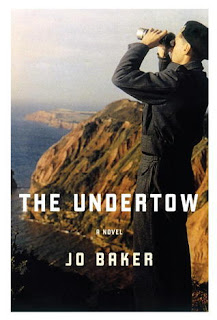
The Undertow

Finished December 29
The Undertow by Jo Baker

This historical fiction novel follows four generations of one family, the Hastings, over time. The first generation's story begins in 1914 as William is about to leave for the navy and service in World War I. He is married, but very young, and promises to send postcards to his wife as his ship stops in different ports. 
The second generation is his son Billy, who starts his first job as a grocery delivery boy, and develops into a champion track cyclist. He too serves in a war, as part of the D-Day landings of World War II. 
The third generation has Billy's son Will, who fights for his own bodily autonomy and career choice, as he deals with a physical handicap, and a difficult relationship with his father. Will becomes a professor at Oxford University, but his home life isn't without difficulty.
Will's daughter Billie is the fourth generation, and she too fights for her own choice for her future, becoming an artist in present-day London, and grappling with her relationships with both her father and grandfather. 
This was an interesting look at family dynamics as each generation finds its own way, and struggles against the expectations of the previous one. Each has their own challenges with some internal and others external. 

Saturday, 28 August 2021

Crossing the City

Finished August 24
Crossing the City by Michel Tremblay, translated by Sheila Fischman

I read the first book in this series Crossing the Continent a few years ago. This picks up shortly after that book left off, and Nana has been in Montreal for a few months now. Part of the reason that she is there is to look after her infant brother Theo, something she resented at first, but she has now grown fond of him. As the first World War has begun, Nana is worried about the safety of her family in Montreal and comes up with a plan to keep them safe.
We also see the story of her mother Maria, as she makes the decision to leave Providence, Rhode Island, where she has been living for years. She has a brother in the RCMP who lives in Montreal, and sisters there as well. She has been seeing an older man after the supposed death of her husband, who did not return from a sea voyage, and who she suspects has a second family elsewhere. Finding herself pregnant and faced with a dilemma, she decides it is time to return to Canada with and ask her brother for assistance. 
We see her reception in Montreal and the family interaction as she reunites with her siblings. 
With Nana, as we see her go off to set her plan in motion, we see the decisions that she makes and how she deals with unexpected obstacles. For some, she takes actions herself, and for others, she is given advice by kind strangers. Nana grows here, in experience and knowledge, and has good instincts. She observes the workplaces of her mother and aunt and sees how they are different than what she envisioned. 
I liked seeing both these characters dealing with difficult decisions and circumstances and making a choice that feels right for them. 

Monday, 22 March 2021

The Daughters of Mars

Finished March 21 
The Daughters of Mars by Thomas Keneally

This novel takes place just before and during World War I, following two sisters from small town Australia through the war. Both Naomi and Sally are nurses, Naomi in Sydney and Sally in Macleary, where they grew up. As the story begins their mother is in the last stages of cervical cancer, being looked after at home by Sally after her regular work at the local hospital, with occasional visits and respite for Sally from Naomi. Sally is the younger sister, and she resents Naomi for some things, like escaping their small town, but also feels tied to her by other experiences.
Both girls apply to go overseas when there is a call for nurses, and both are chosen. Naomi has pressured Sally to stay home to look after their father, but Sally fights to find her own life. They are in the same batch of nurses to ship out, and it takes them some war experiences to find friendship as well as sisterhood. They are often in the same group of nurses, and form friendships with these other women, from a variety of backgrounds. They are also in contact with officers in the Australian army, army doctors, and orderlies and various friendships, and romances develop between the nurses and these men during the years of the war. 
The women go through a variety of harrowing and draining experiences, with all of their skills called upon. They serve in receiving wounded men in the harbour of Gallipoli, on the island of Lemnos, and in France. They grow into their adult selves and find internal strength through these experiences as well as the determination and support for each other that they didn't have before the war. This novel was nominated for numerous awards and won several, and was a book that I could barely put down despite it being a doorstopper. Both Naomi and Sally are deeply drawn and you get a real sense for their characters. There are also several supporting characters who come to life through their interactions and reactions to the situations they are faced with. Well worth the read. 

Saturday, 24 October 2020

Ambulance No. 10

Finished October 14
Ambulance No. 10: Personal Letters from the Front by Leslie Buswell


This collection of letters from the young Buswell seems to date from 1914, although no year is indicated on the letters themselves or referred to specifically in the preface or introduction, and encompass a few months. There is no indication of the recipient of the letters, although it would seem that it was a close friend back in the United States. Buswell served as an ambulance driver, part of a group of Americans who served in this way before the United States joined the war. The letters were originally compiled and published for private distribution in September 1915 before coming out in this book in August 1916. The book's preface and introduction were from the original privately distributed version, but there includes an editor's note about the book's publication, and both a facsimile and the text of a document from the French government giving permission for publication in America. Likely, this was given to encourage the U.S. to join the war. There is also a picture of Leslie Buswell in his ambulance uniform. A footnote to the preface indicates that Buswell himself also gave permission for their publication.
The letters begin on June 17th, when Buswell arrived at his ambulance station for the first time. He was stationed at Pont-à-Mousson, near Nancy. Near him are a railway line, and three rivers, the Marne, the Meuse, and the Moselle. The book includes simple drawings that appeared in the original letters as well as photographs taken by the writer of the area, activities, and people. 
Even when he is describing quite horrific situations or experiences, he maintains a calm writing style, and sometimes shows a bit of humour. 
Some of the experiences are quite amazing, such as how they could see the German line most of the time, and often were visible to the Germans while undertaking their duties or travelling around, yet were often not fired on despite this observation. Buswell describes the house he shared with another driver, the schedule they were put on, where they had a rotation that include overnight shifts, and on call shifts, and how they had to maintain their own vehicles. 
When taking injured soldiers to medical stations, there were competing priorities of getting there as quickly as possible and not making their injuries worse by travelling quickly over rough roads. Sometimes the urgent cases were dead by the time he got them to their destination and other times they still had a chance of survival with surgery. 
He makes occasional forays to the front lines, but recognizes the danger he is putting himself in by doing this unnecessarily and stops after a while. He describes the respect that the American ambulance drivers were given from the soldiers as well as any civilians still in the area. Any socialization that he did was mostly with the other drivers or the soldiers stationed nearby. 
He walks through trees and across meadows and picks flowers and notes the wildlife, from birds to animals. He sees the damage to the buildings and talks about the men he interacted with that were killed in the fighting or bombing. 
This is a very interesting book, showing the real experiences of this time 
The last entry is dated October 13th and he describes his experience of a near miss from a bomb, the following bombardment near them, the meal and music he enjoyed, a visit to abandoned trenches, and the discovery of two wooden crosses, one French, one German, indicating graves side by side in the woods. He listens to the owl hooting near by, the clock, the garden he has discovered that he goes to for solace and nourishment, reflecting on the appreciation he has for the friend he is writing to working to raise funds and awareness for this endeavor.

Monday, 12 October 2020

The Wars

Finished October 8
The Wars by Timothy Findley

I picket this up when I saw that it was on the list of books that had been banned in Canada in the past and I realized that I owned it. It was a fantastic read, as are all of the books I've read by Findley.
The main character here is Robert Ross, a young man from a privileged background that enlists impulsively following the accidental death of his sister Rowena. He holds guilt for not being with her to ensure her safety and Rowena's death sends his mother deeper into alcoholism.
Robert is shipped out west for training almost immediately, and while at Lethbridge looks for someone he can, finding it in an older officer, Eugene Taffler. It is also at Lethbridge that he begins spending significant time with horses as they capture wild horses to use in the war. His journey back east prompts introspection and it is only when onboard the ship to England that he gets close to another officer, in his case this is Harris, from Nova Scotia, a young man on his own, who soon gets ill. Robert takes over Harris's duties dealing with the horses on board the ship, and has a difficult experience when one of the horses is injured during rough seas. When they dock, both he and Harris are able to watch the offloading of the horses, as they swim ashore.
The prologue of this book shows a moment later in the war when Ross is again involved with horses and it is only near the end that one learns the context of this scene.
Robert has a strong moral and ethical center and it is this that causes his experiences in the war to affect him significantly. His wealth and upbringing have sheltered him, and caring for his disabled sister has given him a lot of empathy for those more disadvantaged than himself.
We watch the various events leading to his mental breakdown with sorrow as we know that his pain is real.
The scenes at the front were vivid and detailed and one got a real sense of the horrific situations these young men faced. Other traumas, from assaults on Ross himself to injuries from those he cared about were brought to life in a similarly vivid way.
This story is told by a person decades later, who is doing research on Robert Ross and what really happened to him and what led to the incident that ended the war for him. Their interviews with the nurse that looked after him and with the woman who was a young girl in the private hospital he spent time in more than once really exposed the personality of this young man. The scenes of his parents back in Canada were also meaningful in how they showed his background.
A great read.

Sunday, 27 September 2020

Fall of Poppies

Finished September 20
Fall of Poppies: Stories of Love and the Great War

This is an anthology, with stories from a number of female historical fiction writers. All of the stories have some element of love in them, and are set either during WWI or after, but looking back to it in some way. A few of my favourite writers are included, which drew me to the book.
The Daughter of Belgium, by Marci Jefferson is set in Belgium during the final days of the war. Amelie is a young Belgian woman whose home, shop and family had been attacked during the first year of the war, and her parents died shortly after. She was taken in by Edith Cavell and worked in the clinic helping out wherever needed and learning nursing skills. Now Cavell is dead and Amelie’s fear is growing for her future as the clinic is evacuated. She is staying to try to protect the property, along with her young daughter, Hope. There is also one patient unable to be moved, that she is tending to.
The Record Set Right, by Lauren Willig, is set more than sixty years after the war, when Camilla (Millie), a woman who married and emigrated with her husband to Kenya and built a life there, returns to England at the request of her brother-in-law. They are the last two of their generation and there is history between them that needs to be dealt with.
All For the Love of You by Jennifer Robson is set in Paris in 1925, where Daisy finds out at her father’s death that he lied to someone about her back in 1918, that has changed her life. Daisy is an American woman, in Paris with her physician father, who had worked as a secretary, handholder, and artist at a charitable organization that created masks for men who faces were damaged by the war to provide them a way to move about in their lives with less attention.
After You’ve Gone by Evangeline Holland is set in Paris in the last days of the war.  A Scottish black woman entertainer, must now find a way to move on with her life after the loss of her American husband Charles in the war, leaving her in poverty and without hope. As she walks to the station, she meets a group of Americans and becomes a tour guide for the city where she has so many memories.
Something Worth Landing For by Jessica Brockmole takes place in Remorantin, France, in the last days of the war, when a young American pilot encounters a young French woman in a hospital and offers to be her husband to protect her honour. She writes him letters as he goes off on what will be his last mission, and he has wire interchanges with his mother and thoughts of the young woman he is now tied to.
Hour of the Bells by Heather Webb takes place in a couple of small towns on either side of the French German border, in the last days of the war. A German woman, who married a French man and moved to his home is now mourning the loss of both him and their only son, and worries about her status without her family. She hates Germany for taking her men from her and devises a plan for revenge.
An American Airman in Paris by Beatriz Williams in set in Paris in the spring of 1920 where a young man, a pilot during the war, taking refuge finally in the arms of a woman suffering her own losses, is faced with a past he has tried to forget, and offered a way forward.
The Photograph by Kate Kerrigan, takes place in Ireland in 2016, where Bridie, the granddaughter of a member of the 1916 Uprising, in preparation for a commemorative ceremony learns something about her great-aunt Eileen that influences her attitude in the present
Lastly, Hush by Hazel Gaynor, set in November 1918, where Annie, a midwife, works to help a premature baby thrive after his birth, while worrying about her only surviving son Will, somewhere in France, and Will encounters his last battlefield engagement. 

Tuesday, 30 June 2020

The Deepest Night

Finished June 27
The Deepest Night by Shana Abe

This is the second book in the series that started with The Sweetest Dark. It is 1915 and Lora Jones is a scholarship student at Iverson, a prestigious boarding school for upper class young ladies housed in an old castle on England's southern coast. Lora grew up in an orphanage, and spent some time in a mental institution as well due to the music that she hears due to her special abilities. In the first book in the series, Lora discovered that she wasn't an ordinary human girl, but one that could change into a dragon. Here, she is recovering from injuries she received then, and has a new mission, to rescue Aubrey the eldest son of her benefactor, who is in a POW prison in Austria.
To help her, she has only the younger son of her benefactor, Armand, a young man who has fallen in love with her although her love is elsewhere. Armand does what he can to protect Lora, whether at the school, or outside of it. Even sometimes from his own father. And Lora does what she can to protect Armand, even as he begins to go through the changes that will bring him into his own dragon transformation.
I enjoyed the first book and always meant to follow up on the series, and am glad that I did. A lot of the plot here has to do with social classes, but there is also World War One which figures strongly in the book. Lora has her baggage from the past, and she has challenges in the present with not only the mission that the stars have for her now, but also with some of the girls that she goes to school with and with the social situation that she finds herself in. I really liked her as a character, and how she developed over the course of the book.
Looking forward to reading the third one

Saturday, 16 May 2020

The Walnut Tree

Finished April 6
The Walnut Tree by Charles Todd

This short novel is set during World War One, when a titled young woman eludes her uncle and guardian's oversight to become a nurse and serve near the front. She is inspired by her experience returning to England after being stranded in Paris at the start of the war and making her own way to the coast and a ship home. Seeing the action fighting, the injured, and the men involved makes her reluctant to just sit at home.
Elspeth is a smart and resourceful young woman, and has the support of her male cousins, which helps her cause. She is torn between feelings for her best friend's brother, a young French man now involved in the fighting, and an old friend from Scotland that she meets once again during her initial escape home.
With suspense, drama, and romance, this novel has a lot going for it. This is part of the Bess Crawford series, but Bess plays only a minor role in the story as a fellow nurse and housemate to Elspeth.

Sunday, 9 February 2020

The Great Halifax Explosion

Finished February 6
The Great Halifax Explosion: A World War I Story of Treachery, Tragedy, and Extraordinary Heroism by John U. Bacon, read by Johnny Heller

This narrative of the Halifax Explosion of 1917 is new one on this tragedy. I've read a few, both fiction and nonfiction, and find it endlessly fascinating to find out the stories of the individual people affected by this terrible event. This particular books has one focus on the relationship between Canada and the United States, giving some historical background, showing how Boston in particular came to the aid of Halifax, and how the cooperation between the countries changed the way they related to each other.
Bacon also chose to look at the experiences of one soldier, from nearby Wolfsville, John Ernest Barss, who worked in Montreal before the war, enlisted as a matter of character, was passionate about the need to fight for several months until he became disillusioned and then injured, and returned home shortly before the explosion. He responded as a medical helper, and this experience caused him to become a doctor. His story brings the actual war experience into the story, as well as giving some family history that relates to the theme of the relationship between Canada and the U.S.
Like the other books I've read on this, it covers the actions of the two ships involved up until their collision, and looks at the effect on a number of individuals in the city, on the surrounding area, and at the longer outcomes, such as the court cases involving the owners of the two ships.
The other books I've read didn't really look at the chemistry of the explosion itself, with the enormous power involved and the heat generated.
As I'm planning to visit Halifax for the first time later this year, I was glad to be reminded of this terrible event in the town's history and it's ongoing effects.

Wednesday, 26 June 2019

Cocoa Beach

Finished June 13
Cocoa Beach by Beatriz Williams, read by Eva Kaminsky and Alex Wyndham

This story moves back and forth in time between events during and just after World War I in France and England, and three years later in Florida.
Virginia Fortescue has left her father and sister in New York City to volunteer in France during the War. She has a few reasons for leaving, although she does worry about her younger sister. She has used the mechanical skills her father ensured that she had to become an ambulance driver and mechanic. During her duties, she meets an English doctor, Simon Fitzwilliam, a few years older than her, and is drawn to him. He is in a complicated personal situation, but works to gain her love and trust. Virginia hasn't told him all her secrets, but she does feel safe with him.
Three years later Virginia has come to Florida with her young daughter following notification from Simon's brother that Simon has died in a house fire. Virginia left Simon shortly after their marriage, under circumstances we gradually learn, and has never let him know about their daughter. His voice is given in letters that he writes to her. Again, Virginia has a secret no one knows. She has a letter from him dated after his reported death, and so believes that he is still alive. She searches for an answer to her questions about Simon and his motivations, relying on his siblings for information. But is she trusting the wrong people?
This is a story of secrets, of worry and of trust. In a time of Prohibition, Simon has become involved in illegal alcohol provision, much like the smuggling of his Cornish ancestors. Has this activity become his downfall?
There are several interesting characters here, from Simon and Virginia to the black woman who manages the estate and citrus orchards that Simon inherited. Simon's brother is a bit of an enigma. We know he resents Simon and has all his life, but does that mean that he would actually do Simon harm. The cliffhanger ending leads me to expect another book with some of the same characters.