Showing posts with label Health. Show all posts

Monday, 29 July 2024

The Story of V

Finished July 23
The Story of V: Opening Pandora's Box by Catherine Blackledge

This is an in-depth look into female sexual organs, sexuality, reproduction, and sexual pleasure. The author has a PhD in science, and worked in science and medical journalism. As one would guess from the title of this book, the central subject of the book is the vagina, but it goes beyond that.
She describes how female genitals have been studied over history and talks about how knowledge has ebbed and flowed. Some things were discovered, denied, and then discovered anew. Sometimes these complex organs were simplified or misrepresented. 
She also references female sexuality across numerous species, including insects, birds, and mammals, and talks about how, in many cases, it is the female that controls the sexual encounter and whether fertilization occurs. 
She also talks about how our sexuality goes beyond our genitals involving other areas of our body, and how scent is a big influence on our sexual pleasure. One thing I found interesting in the connection between the nose and sexual arousal was that, for many people, nasal stuffiness or congestion can occur in conjunction with sexual stimulation or orgasm. 
She talks about the structure of the different parts of our genitals, and when we learned about different aspects of them, linking research to knowledge and where we still have things to learn. 
This is an important book, particularly for women, to better understand their own bodies and responses. I read it slowly over many months, taking time to absorb the different learnings throughout. 

Monday, 20 February 2023

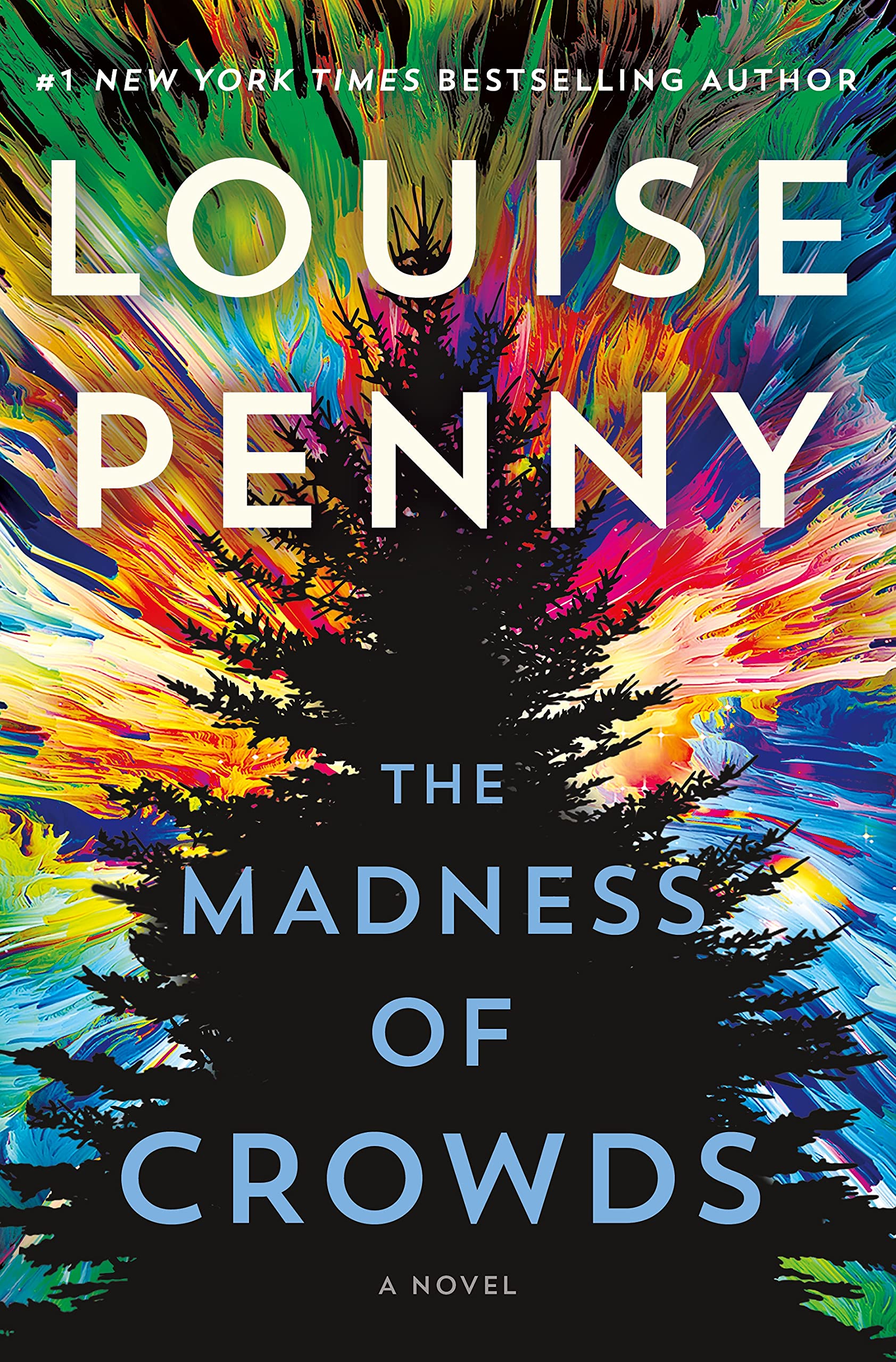
The Madness of Crowds

Finished February 11
The Madness of Crowds by Louise Penny

I always enjoy Penny's books, but this one I could hardly put down. It is the 17th book in the series featuring Armand Gamache. There was so much going on, and she brought in so many issues and bits of history. The novel takes place in the spring of 2022, but was written before then, so it has vaccines working better than they actually did and life more or less returned to normal. That doesn't mean that the pandemic didn't have lasting effects though, and Penny has brought in several issues related to it, including the stress on the healthcare system and the situations that occurred at so many retirement and nursing homes. I think these made it a more emotional read for me as they are still unresolved issues.
She also dug into some historical events around health and government oversight that are particularly troubling, and made them key to the story. This element also brought Reine-Marie in to the story in an active way, helping to uncover some of the historical records from this time. This connected with both characters in the present day, and the question of ethics that runs through the book. 
A lot of the action of the novel takes place in Three Pines, although not all of it. and this means that we see a lot of the residents of the village and learn how they coped with this difficult time. 
Gamache has the responsibility for security for a last minute speaker at a small university. The speaker has controversial ideas and some of the previous speaking arrangements have gone viral, and the event is more chaotic than expected, even with Gamache's preparation. As he digs deeper into the events and the people involved, he finds many people with reasons to react violently. The issues that arise here have a very personal link to Gamache and his family, which reverberate throughout the book. I think this is the book in the series that has both captured me the most thoroughly and haunted me afterward the most. 

Friday, 9 December 2022

The End of October

Finished December 2
The End of October by Lawrence Wright

I started reading this novel in March 2020, but it felt too close to what was happening in the world at that time, so I put it down and moved on to another book. I decided to tackle it again, and it still felt eerily real to me, with so many aspects of the pandemic within its pages relatable to the real-life pandemic. But this time I kept reading, because I truly wanted to know what would happen to Dr. Henry Parsons, his wife Jill and their children Helen and Teddy. 
Henry is a microbiologist working at the CDC and for the WHO. When an outbreak occurs in Indonesia, he travels there on behalf of WHO to investigate. 
The book takes us through scary moments, when Henry first realizes the virulence of the outbreak and then when he realizes that he has lost the moment to contain it. Henry is a dedicated scientist, using his skills to help figure out what he can. Like our pandemic, things are constantly happening that change the situation, and adjustments are constantly being made. 
Also, like our pandemic, authorities don't always give all the information they have, and aren't always clear to the public of the risks and the real numbers affected. 
The side of the book with Henry's family personalizes it more. Jill is a school teacher, worried about her kids in the classroom, but also about her kids at home. With limited access to be able to communicate with Henry, she is forced to make decisions with limited information. She second guesses herself. 
I found the character of Helen the most interesting as she developed. She is in her teens, and is forced to deal with very adult situations. She is scared and very brave. I really liked her.
There are many loose ends here, as there are in real life. We don't know what happens to the Saudi prince that Henry worked so closely with, and the end of the book doesn't tie everything up. But this feels real, and so many of the issues that arise are real: foreign diplomacy, threats of war, suspicion that the virus is manmade, climate change, countries taking advantage of weaknesses to attack other countries, and interruptions to communications and trade. This was still a difficult read, as so many of the issues are real for us now, but it is one that will keep you gripped to the book.  

Tuesday, 17 August 2021

Crazy Salad

Finished August 10
Crazy Salad by Nora Ephron

This collection of articles dates from 1972 to 1974 and was published in 1975. The articles all have a focus on women or issues relating to women. Some are related to social events of the times, some to politics (there are quite a few around Nixon and Watergate) and some to specific female figures. I really enjoyed the essays, and found many of them were still very relatable nearly fifty years later, which is definitely sad to contemplate. Ephron is a very good writer, and she lets her personality and some of her personal bias come through here, which makes the essays feel more intimate and relatable. Having recently read Dorothy Parker, I particularly liked the essay on her, and I also really enjoyed the two Crazy Ladies ones which speaks to expectations on women and women who defy those expectations. A few of these are reviews and Ephron does not mince words when she doesn't think a book lives up to its buzz. 
Altogether a great collection and one I found both enlightening and engaging.

Thursday, 24 December 2020

Fire and Ice

Finished December 14
Fire and Ice: Soot, Solidarity, and Survival on the Roof of the World by Jonathan Mingle


This book uses a small village in the Himalayas as a focal point for environmental concerns in a way that makes it even more relevant and personal. Mingle first met the people of the village of Kumik in the Zanskar valley of the Himalayan mountains of north west India in 2012 when he was asked for advice on how to build homes to take advantage of passive solar energy, something he has experience in. The village of Kumik is one of the oldest villages in this part of the world, and depends on water from the glacier above for both its daily life and its sustaining agriculture. But the water has been providing less and less over the years, with the glacier shrinking and most of the remaining meltoff going down the other side of the mountain to other villages. 
The village people have been looking at their options as the fields they plant each year decrease and men work at other jobs, away from the village more and more. They have decided to move the village to a new location, where they can arrange irrigation from a nearby river. They will be building a new village from scratch, and want to do it in a way that takes advantage of things like solar energy as much as they can.
Through Mingle, we see the intricacies of village life, how they depend on each other, and the long history of the social contract "chu len me len chaden" which has neighbours supporting each other with fire and water. Violators of the social system are cut off from both these necessities, putting them in the position of not being able to survive. 
We see his work and his interactions with the villages over a couple of years as they gradually build their new village, have many meetings and make many decisions, and work together for their future.
Mingle looks at why glaciers are shrinking and the role not only of carbon dioxide, but also of black carbon. Black carbon, often appearing as soot has many effects. Not only does it pollute existing glaciers and cause them to heat more and thus shrink more quickly, it also has huge effects on human health (and indeed the health of all living things). Thousands of people die every year due to its effects, all around the world. Black carbon's health effects are seen locally, while its environmental effects are global. Many of the world's poorer countries use cooking and heating fuel that contributes to the production of black carbon, not only through the type of fuel, but also through the way that it is burned, leaving unburned particulates in the nearby atmosphere, both in homes and in the air around communities. It is also an output from the use of diesel fuel, often used for generators in  remote communities, but also transportation around the world. Even in the more developed world, the use of wood burning stoves and heaters contributes to this pollutant. 
I learned that the colour of the flame is a strong indicator of the presence of black carbon as an output.The bluer the flame, the cleaner burning it is. That orange glow we admire is not a healthy sign. 
In many instances this is something that can be tackled even more easily than the issue of carbon dioxide (although that can't be ignored). Development and distribution of cleaner burning stoves and heaters needs investment and government support worldwide. The infrastructure and training to support maintenance of these new units is key as well. The use of local solar generators can be another tool for reducing black carbon. In the developed world, replacing wood stoves with pellet stoves can help this effort. 
I learned a lot from this book, and it gave me hope that we can work together to improve the lot of people, from this small village of hardworking people in the Himalayas to our own communities in cities and suburbs. This recent case of the role of this kind of pollution in the death of a young girl in London spoke to its impact in cities. 
Highly recommended.

Sunday, 13 August 2017

The Peculiar Miracles of Antoinette Martin

Finished August 7
The Peculiar Miracles of Antoinette Martin by Stephanie Knipper

This novel begins with Rose Martin watching her young daughter Antoinette sleeping. She loves her deeply, but worries over her. We get the sense that something isn't right with the child. We next see ten-year-old Antoinette on her own, leaving the farmhouse to go out to the field of flowers beyond. We see that she responds to nature, but has difficulty moving, and is unable to talk. They live at the home that Rose and her sister Lily grew up on, at a farm near a small town called Redbud, in central Kentucky, near Lexington. The farm is a commercial flower farm.
Rose's sister Lily lives a couple of hours away in Covington, Kentucky, the north end of the state. She works for an insurance company there. Not far, but she hasn't talked to her sister in years, Not since shortly after their parents died, and Rose asked Lily to stay at the farm and help. Lily felt then that staying was a challenge that she wasn't up to, and Rose resented her for that decision. Both women have wanted to reach out many times since then, but neither has the courage.
So when Lily gets a call from Rose, once again asking her to come home, and tells her of her own failing health, Lily goes. She is still wary, afraid of the way she begins to act when she is around her young niece. She is very surprised to find that their neighbor, Seth, a man that Lily once thought she had a future with, is back in Redbud and working at the farm. Lily never really got over Seth, and thus the homecoming is even more emotional that she guessed. As she gets to know Antoinette, she finds that she can relate to the young girl, but when she discovers that Antoinette has healing powers of some sort, she is upset that neither her sister nor Seth has told her. As she learns more, she understands the situation better, and begins to find her place again there.
Lily's neighbor from Covington, Will, a young doctor who is a good friend, has followed Lily south, and shows up unexpectedly. Will has strong feelings for Lily, but also is a sensitive and observant man, and he begins to notice Antoinette's abilities fairly quickly. He also notices something else about them that no one else has, something that makes a big difference.
This is a story of love, of families, of how it feels to be "different," of the sacrifices that people will make for love. It is a story of a woman who comes to accept herself as she is, rather than fighting against her impulses. A story of two sisters who care deeply for each other.

Sunday, 6 August 2017

Cottage Cheese Thighs

Finished July 6
Cottage Cheese Thighs by Jenn Sadai

I took my time reading this book to think about the issues that Jenn highlights here. This is a book about body image, and about the society pressures around women's body image. It is also a memoir of Jenn's only journey from yoyo dieting to meet these unrealistic body images, and her move aware from that dynamic to a more realistic, healthy, and happier life loving her body, taking care of it, and not worrying about external judgments. Other than for the purposes of the book to show her change in lifestyle is not one of denial, she also eschews the use of a scale in her life.
Jenn used an image of her own body for the book cover, and had to veer away from some of her new choices to show the "cottage cheese" look she wanted.
She talks to other women, friends and acquaintances about the need to stop letting media dictate what a woman's body should be and love our own bodies for the work they do for us. Yes, that means giving them healthy fuel to do that work, but it doesn't mean giving up all tasty foods in chasing an unrealistic ideal.
Her message is a good one, and I hope that others will read this book and think hard about the way they treat their own bodies.

Wednesday, 5 November 2014

Year of No Sugar

Finished November 3
Year of No Sugar: a Memoir by Eve O. Schaub

This book came out of a blog that Eve wrote over the course of the year that she and her family tried to nearly eliminate sugar from their diet. She starts with information about how she was introduced to information about the dark side of sugar, and how it affects our bodies. She talks about how she and her husband planned ahead for the year, and how they introduced the concept to their two daughters.
The main body of the book deals with the experiences of the family over the year. Her older daughter Greta also kept a journal and some of her entries are included in the book as are a couple of thoughtful pieces by her husband. Eve talks about the difficulties of the task of eliminating sugar, discussing the pervasiveness of sugar in prepared foods, even those as basic as bread. She exposes the existence of sugar in foods one wouldn't have associated with the ingredient.
She talks about the interesting effects of nearly eliminating sugar on her and her family's bodies, their digestive systems, their sense of taste, and their reaction to sugar on those rare occasions when it is allowed. She particularly deals with the reactions of her children, eleven and six to this change in their diets, showing how they came up with a set of rules to follow, giving the children some slack, and the ability to make their own decisions in certain situations.
She also provides some recipes, learned through the trials and errors of finding new foods to fill the gaps left by sugar.
I found myself cleaning out my cupboards of those foods harbouring hidden sugar, of looking harder at labels when shopping for food, and finding that things in a large city a few years after her experience were somewhat easier. I easily found appetizing bread that didn't have sugar, pasta sauces, cereals, and canned soups. But sadly, even the organic, no preservatives bacon have sugar, and I do like the occasional glass of wine. So I don't think I will go to the extremes of her year, and even she didn't stay at that level after those first twelve months. But I will make more food from scratch, using healthy and local ingredients, and I will look more closely at labels, choosing those without sugar whenever I can.
This was an eye-opening book and provides a lot of useful information for those wishing to make a change for healthier eating.

Thursday, 6 March 2014

No Wonder You Feel Like Crap

Finished March 5
No Wonder You Feel Like Crap by Richard Weinstein

This book came to my attention through Netgalley, but I didn't get around to reading it while I had access, so read the book more recently. Written by a chiropractor with decades of experience, the research backing up his reasoning is cited extensively in the back of the book. He also uses several examples of his own patients when talking about treatments and results.
I'm planning to try his suggestions to see if they can address some of my longer term health issues. The core of his theory is cortisol imbalances, and he makes a good case for this, using anecdotal evidence from his own work, physiological information, pharmaceutical information, and research that backs up the theory. His treatment is called the 3R Program and consists of three parts: Repairing the intestinal tract, Resolving inflammation, and Restoring hormonal balance. Besides this physiological treatment, he also has chapters on psychological and emotional causes of conditions and pain that provide useful information.
Included in his discussions are issues of conflict between western reliance on pharmaceuticals and eastern practices, which rely more on paying attention to the body closely and looking for root causes. He also critiques our food industry with the effects of hybridization, genetic manipulation, and chemical additives.
An interesting theory that bears looking at.

Monday, 20 May 2013

Open Heart

Finished May 19
Open Heart by Elie Wiesel

This short memoir is from June 2011 to around a year later. In June 2011, Wiesel went to his doctor complaining of pain and was told it was his heart. He had had numerous health problems, but never anything to do with his heart, and was surprised. He was even more surprised when the urgency of needing more tests and surgery was impressed upon him. This memoir describes his reaction, the surgery and his impressions of that, his feelings during his recovery and his reflections on the experience.

Thursday, 15 November 2012

Rose Reisman's Choose It and Lose It

Finished November 14
Rose Reisman's Choose It and Lose It: the road map to healthier eating at your favourite Canadian restaurants by Rose Reisman

I liked that this book gathered information from a number of restaurants in one spot, and I liked the number of restaurants included. It gave good overviews with history of the restaurants and one other nugget of information. Sometimes this other information was general information on that's restaurants offerings in terms of healthiness, sometimes trivia, sometimes something more specific.
For each restaurant, there was a main "choose it" option, and a main "lose it" option, with three additional items under each category. Sometimes these include a children's menu choice, sometimes an appetizer, sometimes a "snack", sometimes another meal.  For a couple of restaurants with broader menus, there was a double set of entries, giving two main "choose it" and "lose it" items with extra choices under the second mains. (Essentially the restaurant had double the information)
As a person who can't eat cheese, I was surprised to find so many of the "choose it" choices were cheesy. For some restaurants, all of them were, which wasn't personally helpful.
One other thing that I didn't like was that sometimes one of the additional "lose it" choices was healthier than the "choose it" choice. And sometimes the category didn't make sense. A case in point is MacDonald's. The main "choose it" choice is the Big Mac at 540 calories, 29 grams of fat (10 saturated) and 1020 mg of sodium, with the main "lose it" choice as the Angus Deluxe at 780 calories, 47 grams of fat (17 saturated) and 1660 mg sodium. No arguments there. But an additional "lose it" choice is the McChicken Sandwich at 470 calories, 27 grams of fat (5 saturated) and 790 mg sodium. That would be my sandwich choice if I went (because it has no cheese!) and it is healthier than the Big Mac, which is a "choose it". Then I noticed it is listed as a "snack". The "choose it" snack is a cheeseburger. That makes no sense. The McChicken is a regular sandwich choice on their menu, unlike a cheeseburger, and I would have put it in the same category as a Big Mac in terms of choices. Yet it is not recommended, while the Big Mac is. So now I am wondering about the alternatives not listed here (the Quarter Pounder, the Fish Fillet, etc). Are they better or worse than the Big Mac? Now I have to go to McDonald's website to check. So, this entry actually didn't help me other than it made me go looking for more information. (Big Xtra, Quarter Pounder with Cheese, and Fish Fillet are all better than the Big Mac, with the Fish Fillet the best at just 410 calories, 20 g fat, and 580 mg sodium).
So the problem now is that, knowing this, I now feel the need to do this with every restaurant since obviously only some choices are listed for each one and they may not be the best choice at that establishment. For me, this book raised more questions than it answered, and didn't always lead to the best choice. Too bad, because I've loved (and bought) all her cookbooks and was really looking forward to this one. I guess it is good that it raises the idea of some seemingly healthy choices being less good than they appear, and gets people looking for more information, but it certainly wouldn't be my final stop on that search for information.

Sunday, 29 July 2012

Just the Rules

Finished July 29
Just the Rules: Tosca's Guide to Eating Right by Tosca Reno

This short guide is a portable tool for following the Eat-Clean Diet regime. Each rule is listed with short explanations and a sense of humour. This is common sense told in a plain and simple, straightforward manner. All of it makes sense, and so do the reasons behind it. A great overview of eating healthy.

Wednesday, 16 February 2011

Data Smog

Finished February 16
Data Smog: surviving the information glut by David Shenk
This book has been on my "to read" list for many years and, noticing it in the library, I decided to tackle it. For a book written 14 years ago, it is surprisingly relevant today. If anything, the smog has gotten worse.
The book illustrates the "laws of data smog" and discusses some ways to tackle the problem.
Here are the laws, with some explanation:
1. Information, once rare and cherished like caviar, is now plentiful and taken for granted like potatoes.
This one is pretty self explanatory. Information, or data, comes to us from many sources through many mediums, with information overload replacing information scarcity as a problem. Information is not knowledge and needs to be considered in context and as part of a bigger picture.
2. Silicon circuits evolve much more quickly than human genes.
The power of technology has grown more quickly than our ability to process it. We are overwhelmed and have trouble dealing with the deluge. ADD is on the rise, along with cardiovascular issues, vision issues, and confusion. This leads to impaired judgment and overconfidence. We have grown dependent on technology and it has become like a drug we rely on.
3. Computers are neither human nor humane.
Technology has unexpected consequences (kind of like kudzu) and we are losing control to the machines that were supposed to serve us.
4. Putting a computer in every classroom is like putting an electric power plan in every home.
Computers help access are deliver large amounts of information quickly. They are not filters, but pumps. They can be useful tools, but are not a substitute for learning. Measurement of factual knowledge of various groups from schoolchildren to adults has shown that we know less about the world we live in than we used to, not more.
5. What they sell is not information technology, but information anxiety.
This is the sales call to upgrade to new technologies constantly. The faster and faster pace takes hold of us are instead of helping us be more efficient places more expectations on us.We are forever playing catch-up.
6. Too many experts spoil the clarify.
The opportunity of immense amounts of information allows groups to manipulate and spin data to prove pretty much any point of view. With so much expert opinion, determining which ones are reliable becomes more and more difficult.
7. All high-stim roads lead to Times Square.
It is no longer difficult to get your message out, but finding a receptive audience can be a problem. It takes more to get our attention, and that has led to more extreme efforts to get that attention (shock jocks, trash TV, excessive violence, extreme rhetoric, noisier advertising are all part of this). Everything is a crisis that demands immediate attention and we become jaded and less caring.
8. Birds of a feather flock virtually together.
This is nichification, the more and more specialized places where people of like minds can come together. Instead of information leading to more communication and discourse among people from different backgrounds and with different perspectives, there is more fragmentation and less understanding. Less information is truly shared.
9. The electronic town hall allows for speedy communication and bad decision-making.
People have more of a voice, but less ability to self-govern. Instead of government being leaders of the people, they respond to surveys and research on what people want and respond to that. The government ends up being followers to citizens that don't understand the full nature of the problems that are being faced.
10. Equifax is watching.
Personal privacy has become harder to maintain as information on our habits obtained from merchants, government, and other sources is more easy for others to obtain. 
11. Beware stories that dissolve all complexity.
The good story, whether selective, exaggerated or wrong, spreads quickly and without barriers around the globe. This can have great effect to individuals, companies, and even countries that get caught in these apocryphal stories.
12. On the information highway, most roads bypass journalists.
Because it is easier to disseminate information without going through traditional media, anyone can send out information and the average person is less able to assess the quality and factual basis of the information given. This leads to misinformation, misunderstanding and more confidence in less knowledge. The age of the news bite, without the education needed to analyze what it means to us is ultimately less relevant.
13. Cyberspace is Republican.
Technology favours the ideals of libertarian, free-market Republicans towards a decentralized society with little regulation and public infrastructure. This utopia is always long-term with little attention paid to the short-term costs to society.

This book is still extremely relevant and provides much food for thought on how to change the flow of information to make it work for us in a healthier and more helpful way.

Tuesday, 8 September 2009

Memoir

Finished September 4
What I Thought I Knew by Alice Eve Cohen
This is a memoir of a certain time in Cohen's life and she is very open about her feelings and thoughts during these time. Cohen and her husband had tried to have a baby and found that she was infertile. Her own mother had taken DES during pregnancy, and this affected Cohen's own reproductive health. Cohen began hormone treatment to treat some of her health issues. They adopted a daughter and later divorced. A few years later, Cohen is in a new relationship, engaged to be married and happier than she has ever been. It is at this time that her story truly begins. She feels ill and takes her myriad of symptoms to her doctors who run tests and diagnose her with gastrointestinal problems. Months later, when she is still feeling badly and is told she has an abdominal tumor, she is sent for an emergency CAT scan that shows that she is six months pregnant.
Cohen is in her mid-forties, has had no pre-natal care, has been on drugs that could harm her fetus, has minimal health insurance, and is bombarded by opinions on the possible outcomes for her child. She vacillates between doubt, rejection and acceptance, and is extremely honest about her thoughts during this time. She worries about the health of her child, family finances and her own ability to handle the whole thing.
This is a memoir like no other I have read, and one that was gripping to the end.

Saturday, 14 July 2007

Quite a few finished

Finished July 14
Small Wonder: essays by Barbara Kingsolver
This wonderful collection of essays addresses the world as Kingsolver sees it. She pulls no punches about this time in history. The essays range from personal ones about her own family and environmental concerns to larger issues politically. Her writing is excellent and you can tell she is passionate about all the subjects she writes on. I found myself moved and inspired by these writings and left with hope for the future despite the obstacles currently facing humanity.

Queen's Court by Edward O. Phillips
This delightful novel follows Louise Bingham as she settle into life in Montreal after moving back there from Victoria after her husband died. She connects again with her cousin Diana, but worries about Diana relying on her too much for company. She also reconnects with a previous lover, and remembers why she ended the relationship, while not necessarily discarding future possibilities. In her new apartment, she finds the neighbour across the hall a bit full of himself and has suspicions about his motives. When her son, Craig, comes to visit, her adds to the mix and she discovers she really doesn't know him that well.
I really enjoyed this entertaining book.

Healing and the Mind by Bill Moyers
Moyers interviews a number of experts in the field of holistic medicine, finding out how they came to where they are in their practice, what they see as the realities of their practice and what are the issues. This was interesting, and the fact that it was written 15 years ago made it interesting to see advances, or lack thereof, in the different areas.

Finished July 13
A Fall from Grace by Robert Barnard
This mystery surrounds Detective Inspector Charlie Peace and his wife Felicity. The couple are moving in advance of the birth of their second child and, unexpectedly, Felicity's father offers to give them some money towards their house if he can live with or near them. Since Felicity does not like or get along with her self-centered father, they help him find a house nearby. As they settle into the new neighbourhood and become aware of some issues, they also learn of Rupert's real reason's for leaving his old town. They are already beginning to wonder about the relation of these problems when a death occurs and Charlie thinks it is murder, despite the local police opinion. I enjoyed this story, but found the plot a bit forced and the story light.

Why Can't a Man be More Like a Cat by Linda Kenner and Antonia van der Meer
I got this book from my mother-in-law who picked it up as a discard from Toronto Public Library. A nice little bit of humour about the differences between cats and men, although my cats don't always conform to these descriptions, and neither does my husband!

At Sixes and Sevens by Rosie Harrie, read by Nerys Hughes
Two sisters, who lived with the father, were quite different. Rhianon did all the work around the house and was taken for granted and blamed when anything went wrong. Serena was the pretty one who got everything she wanted and therefore expected everyone to fall in with her whims.
When Serena egged on her boyfriend and Rhianon's to fight, Serena's boyfriend was hurt badly and eventually died. Rhianon's boyfriend went to jail, but not before having a passionate moment with Serena and fathering a child. Rhianon took the child in to look after and Serena went back to her flirty ways while Pryce was in jail.
This story dragged a bit, and Rhianon, despite being described as intelligent, seemed too easily taken in by her sister. Rhianon was too good to be true, and Serena too bad. The characters didn't feel real.

Wednesday, 4 July 2007

Memoirs, Historical Fiction, and Self-Improvement

Finished July 2
Dream When You're Feeling Blue by Elizabeth Berg, read by the author
This is a bit different than what her novels usually are. It is set during World War II in Chicago, around an Irish Catholic family, the Heaneys. Besides the parents, Frank and Margaret, there are 3 girls Kitty, Louise, and Tish along with 3 younger boys. Louise and Kitty having been seeing two young men that are now shipping out to war. Louise and Michael become engaged, while Kitty remains unsure of Julian's intentions. Besides their own two young men, the sisters write to other young soldiers they have met at USO dances endeavouring to keep their spirits up. Kitty begins working at the Douglas aircraft factory to both help support the family and the war effort. She also learns to take pride in her work. Tish is the lively one, flirting with the men and keeping everyone's spirits high. As the war goes on, Louise finds herself pregnant after Michael comes home for leave and the family supports her through this. As the girl's allegiances to young men adjust, so do their relationships to each other. I found the ending forced and unfulfilling and generally did not enjoy this as much as Berg's other books.

Finished July 2
Live Longer: Boost Your Energy, Strength, and Mobility--and Feel Young for Life by Sally Brown
This is a nicely written book with each idea (of the 52 brilliant ideas) given in around 5 pages. I found several that I was already doing (yeah!) and some that I will definitely start doing. Each idea is fairly well presented and tips are given. There are links from one idea to others in the book and questions and answers at the end of each idea. The book is well formulated and the ideas reasonable and stated factually. I liked it and made notes on several.

Finished June 29
The Company They Kept: Writers on Unforgettable Friendships edited by Robert B. Silvers and Barbara Epstein
This was an interesting collection of writings on special friendships brought together in one volume. Many were published previously or given as talks at memorials. I found the range of writing interesting and the types of relationships varied. Some of the writers were more admirers than close friends, while other friendships had interruptions. The stories give new viewpoints to those written about as well as about the writers. An interesting idea, well-executed.