Showing posts with label Germany. Show all posts

Thursday, 13 August 2026

Short Circuit

Finished August 9
Short Circuit by Wolf Haas, translated by Jamie Bulloch

This fascinating thriller novel was inspired by the artwork of M.C. Escher and jigsaw puzzles. One of the main characters is Franz Escher, a man who works as a funeral orator and lives a quiet life. Years ago, a woman gave him a birthday gift of a jigsaw puzzle of one of Escher's pictures and he became hooked. Now he has bookcases filled with jigsaw puzzles. He does them often. His other hobby is reading about the mafia, both fiction and nonfiction. Some time ago Franz wrote a fiction book about working in the funeral business, that drew heavily from his real life and real people, including a co-worker named Nellie. Nellie had not gotten angry exactly, but she brought up certain elements of the fictionalized version of herself, and why he made certain choices. Franz felt embarrassed at his literary work, and took the small advance he earned from it and invested it in an online bookstore that he read about that was doing badly financially and expected to go into bankruptcy. He just wanted the money to go away. 
Franz has a faulty outlet in his kitchen, that has been getting gradually worse, and now has a loose connection that makes him nervous. He only has the one countertop outlet, and must constantly unplug appliances in when he wants to use a different one: kettle, coffeemaker, toaster. He has called for an electrician and while he waits he first finished a jigsaw puzzle, and now he is reading a book about an Italian mafioso turned informant Elio Russo. Russo is awaiting being released from prison into a witness protection program. 
Meanwhile, Elio is nervous about his upcoming release and can't sleep, so he is reading a book about a man named Franz Escher, who is waiting for an electrician to come fix a faulty outlet in his kitchen.
As we move back and forth between these two stories, and a third voice related to one of the protagonists, we find ourselves in a surreal world as we wait for them to realize what is happening. 
Thoroughly enjoyable.

Wednesday, 3 December 2025

Another Time and Place

Finished November 22
Another Time and Place by Samantha Grosser

This novel is set in 1944 and 1945 and has two voices. One of them is Anna Pilgrim, a young Englishwoman, brought up by a disgruntled divorced mother in a poor household. She is now working in the office of a munitions factory, overseen by a man whose family used to live near hers. The second is Tom Blake, a young American bomber pilot from the western United States. 
They meet in a cafĂ© on Anna's day off and during Tom's leave. They connect in a way that neither of them expects and spend the next week together mostly in a hotel near Tom's base. When he goes on a mission and doesn't return, Anna returns home to her mother's anger, and goes back to work. 
Her mother is pressuring her to marriage, to a man they know, but in whom Anna has no interest. Besides, she is waiting for Tom as they had already made plans to marry. 
Tom, meanwhile, was injured when his plane went down and doesn't know what happened to the rest of his crew. As we see him worry about Anna and try to get messages to her but receives no response, he vacillates between hope and despair. 
This is a romance story of immediate attraction, followed by unplanned separation, that tugs at the emotions. As we see each character and know that the other longs for them, we are drawn in to the worry that they may not reconnect despite their feelings. I found myself caught up in the story. Anna is a strong woman with an independent attitude, and who luckily has a close supportive friend. Her relationship with her mother is antagonistic and has never been a good one. The characters have depth and motivations that make sense. A good read. 

Friday, 13 June 2025

The Lost Book of Bonn

Finished May 28
The Lost Book of Bonn by Brianna Labuskes

This historical novel has two timelines. The one the story starts with is that of Emmy Clarke, an acquisitions librarian with the Library of Congress. It is 1946, and she has been sent to Offenbach tasked with going through books at the Archival Depot looking for anything that could be deemed 'enemy literature' in an effort to learn more about why and how all this had happened. As a precaution she would be going as a US Army soldier in uniform.
Emmy was raised in Montana by a single mother who ran a travelling library through logging camps. She later moved east and worked in public libraries before taking her current job. Her husband Joseph died in the Normandy invasion and she holds anger towards the German people for it. Emmy is met by Major Wesley Arnold, of the Monuments, Fine Arts, and Archives unit who has been part of the group searching for cultural works taken by the Nazis. 
As they travel from the train station to the Depot, they drive through rubble and see the hunger in the people along the way. She finds her feelings towards the Germans becoming more complex, and doesn't feel good about the suffering she is observing. In conversation with the Major, Emmy says that she doesn't think this is what justice looks like. Her first visit to the depot she finds overwhelming with the volume of material there. When she randomly opens a box and finds a book of poetry with an inscription written with love, she feels that she must return it to the owner. Despite her desire to put books back into the hands of the owners, that is not her mission. She is only allowed to work on books, documents, and films that originated in Germany or were created or owned by Nazi Party leaders. This is to guard against any accusations of looting. The book that she picked up does not fit in this category, but her emotional reaction to it leads her to take it and try to find the Annelise the book is inscribed to. 
The second timeline begins in 1937 in Bonn, and follows Annelise Fischer, a young woman who is part of a group of teens who enjoy outdoor pursuits like hiking and camping, but who have also started acting against the groups of Hitlerjugend (HJ) increasingly present in their town. They call themselves the Edelweiss Pirates. We see the friendships, the teamwork, and the worries of these young people. Annelise in particular worries about her younger sister Christina who has recently joined the HJ to try to fit in, but who is naive and doesn't understand the full ramifications of what she is part of. As the war begins and the teens move into adulthood, their actions become more serious and the risks become more dangerous. As Annelise falls in love with a young Jewish man, she tries to protect him, and avoid the eye of a German soldier who desires her. Christina ends up in the middle, and we see her growing into understanding and her own way of dealing with her situation. 
As we follow the three women: Emmy, Annelise, and Christina, and learn their stories, this novel takes us into their lives and the decisions they make. Each will find their heart pulled by someone, and each will have to make choices that are sometimes uncomfortable. This book draws these characters with depth and empathy, and the plotlines both fit real history and the lives of these women. A great read. 

Friday, 14 March 2025

The Door-to-Door Bookstore

Finished March 8
The Door-to-Door Bookstore by Carsten Henn, translated by Melody Shaw

This is a novel of loss, loneliness, books, and human connection. Set in a small town in southern Germany, the story follows seventy-two-year-old Carl Kollhoff, who works for the City Gate bookstore and delivers books to people's homes. Carl's friend. Gustav Gruber owns the shop and Carl has worked there for years. Recently, Gustav has moved into a care home, and his daughter Sabine runs the store. Although she grew up thinking of Carl as a kind of uncle, she seems to resent him now, and he tries to keep a low profile while at the store, as he also helps regulars find the perfect book for them. 
Carl has a number of people he delivers to, and he wraps these books carefully before setting off on his deliveries. He has nicknames of a sort for these customers, based on literary characters they remind him of. From a nun who is the last resident of her abbey to a retired schoolteacher, he knows each client's reading habits and a tiny bit about their lives. He also has a relationship with a cat he meets along his route, one that makes odd noises and is happy to have short interactions with him. 
One day, as he sets off along his delivery route he is approached by a schoolgirl who seems determined to accompany him. She calls him the Book Walker and introduces herself as Schascha. Over the days, as she keeps returning, she gradually insinuates herself not only into his life, but also the lives of those he delivers to. She helps him learn more about these people and try to help them in different ways. But Schascha has secrets as well, and some of hers have an impact on Carl's life in large ways. 
This is a story of unusual friendships, of people looking for love and meaning in their lives, and of how books make a difference. 

Tuesday, 27 June 2023

Good Night, Irene

Finished June 17
Good Night, Irene by Luis Alberto Urrea

This novel focuses on a little known group of women who worked for the Red Cross attached to the U.S. Armed Forces during World War II. They were set up in teams of three to man Clubmobiles that supported the troops for morale. The large buses were similar to today's food trucks. They served coffee, tea, and donuts, and were equipped with record players and a speaker system to broadcast the music to those waiting for service. These mobile units travelled to airbases, troop stations, and to troops near the front. 
In particular, it focuses on Irene Woodward, a young woman from a well-to-do family in New York City. She is fleeing an abusive relationship, and hopes to do her part for the troops. She goes to Washington, D.C. for training along with a number of other young women, and they get trained to drive the truck they will be operating, and to make donuts and coffee. During training she made friends with Dorothy Dunford, a young woman from the Midwest who has sold her family farm after the death of her parents and the loss of her brother in the war. She is a take-no-nonsense woman with driving skills and gumption. The third girl in the bus is Ellie, a woman from Chicago. 
After training, the women travel by ship in a convoy to England, where they use a British truck until their new wheels are ready. Besides serving at their mobile unit, they go to various troop stations and officers' clubs to do similar work. 
Soon after D-Day, the women take their bus over to France, where they move east along with the troops, finding themselves in some tricky situations and experiencing war firsthand. Although not looking for love, Irene finds herself drawn to a fighter pilot named Hans who pursues her in a way that gains her trust. As Irene finds friendship and love, she also experiences the worst trauma of her life, witnessing situations she never imagined. 
This novel has real emotion and the characters feel very real. There is humour and grief, love and loss, and I was intrigued to see that Urrea found the inspiration for this book in his own mother's experiences as a Red Cross Clubmobile worker. 
An amazing read. 

Wednesday, 26 January 2022

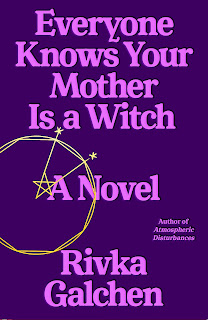
Everyone Knows Your Mother Is a Witch

Finished January 24
Everyone Knows Your Mother Is a Witch: A Novel by Rivka Galchen

This historical novel is based on real people and history. Johannes (Hans) Kepler, the astronomer, had long before left home and started his professional life by the beginning of this story. 
His mother Katharina Kepler is accused by a neighbour of being a witch. At first she thinks she should ignore it, and then she reconsiders as she understands that more people have heard of it, and she determines to speak out on her own behalf. She must have a legal guardian with her because as a woman she can't actually speak for herself. With her two sons, only one of whom is in the same town as her, struggling to make livings, she asks her neighbour, a man around her own age, to be that person. 
I found that relationship interesting as they'd had little to do with each other before then. We see them spending more time together and getting to know each better. 
It is a time of great uncertainty. The plague is still a threat and very soon the Thirty Years' War will begin. Hans makes a living in various ways, supporting his two children from his first marriage, and his second wife Susanna and young daughter Maruschl. Katerina's other son Christoph is a pewtersmith and lives near Katharina with his wife Gertrauta (Gertie) and daughter Agnes. He is worried about the effect her accusation will have on his business and ability to make a living. Her daughter Greta has married later than usual for those times, to a pastor, and soon into Katharina's ordeal they more to another town.
All three of Katharina's surviving children are supportive, and yet they or in Greta's case her husband, are worried about the stigma rubbing off onto them and their families. When she visits, she keeps her head low, and avoids interaction with friends and neighbours. At home, she becomes worried about what stories people are saying about her, and continues over many months to struggle to clear her name. 
Through the course of the book, we also learn about her past, her youth and her marriage, and why she now lives alone. We get a sense of the external world that she deals with, as well as her feelings and motivations. Katharina is a simple woman, who tends her garden, takes good care of her cow, and makes both food and remedies from plants she grows and gathers. She is illiterate, and requires someone, here Simon, to write her words for her. She is older and enjoys spending time with her young grandchildren, telling them stories, and playing with them. 
As this story unfolds, it becomes larger, representing the story of others falsely accused, and women's lower position in many eras. We see how it affects her community and her independence. 
A fascinating tale, well-researched. 

Friday, 4 June 2021

Little Snow Landscape

Finished May 26 
Little Snow Landscape by Robert Walser, translated by Tom Whalen

This collection of short works by the Swiss writer Walser is organized in chronological order of writing. The first short piece, less than a page, is an ode to his home, and the last item is another longer nonfiction piece on his childhood in his hometown of Biel. In between there are both fiction and nonfiction pieces, some about travelling that he did on foot and by train in both his country and in Germany where he lived for many years. I think these were the ones I enjoyed most.
There are others that seem to be jottings of thoughts, such as "Hats" which looks at both headgear and words related to the German word for hat. 
Some of the fiction is more fantastical and he writes in first person, taking on different characters with unexpected meanderings. There are some references to class, such as servants and employers, workers doing tasks, and decisions made about activities due to financial constraints.
The title story is the enjoyment of venturing out for a walk on a morning after a fresh snow. It is a lovely piece. 
This is a nice book to dip into in those short periods of time waiting for someone or for an appointment.

Monday, 17 May 2021

Two White Queens and The One-Eyed Jack

Finished May 12 
Two White Queens and The One-Eyed Jack by Heidi Von Palleske


This book is a winner. It takes you into the world of four young people, following their lives from the age of six to their early twenties. Gareth and Johnny are best friends, up for any adventure. When Gareth climbs a tree successfully, Johnny is urged to tackle it after him, climbing higher and higher, but he falls, and is hurt. The fall results in the loss of one of Johnny's eyes. Gareth struggles with the guilt he feels of urging Johnny on. The boys remain friends, but for a long while, there is distance between them that wasn't there before. Interestingly, the incident results in another revelation, the fact that Gareth's older brother Tristan is blind in one eye. As Gareth's family deals with this, and numerous doctor visits are kept, Gareth has a random encounter with two young girls in a waiting room.
These two girls are twin sister, Blanca and Clara, albinos who live with their grandfather in a very dysfunctional family. Their mother, Faye, is living in a mental institution and they go to see her from time to time. The also spend time at the home of their uncle and his family. They are bullied at school, and subjected to strict rules at home, but they find refuge in the home of their downstairs neighbour, Esther Perlman, a refugee from World War II, who was the only one in her family to escape the Nazis. Esther teaches them art and manners, and they begin to plan a way out of their situation, by taking advantage of their uniqueness instead of feeling lesser because of it. These are strong-willed girls and their intense connection with each other is their strength.
Johnny's mother Hilda, is another European immigrant, in her case running from a life that she didn't want to face. But she remembers a figure from her childhood and thinks about how he may be able to help her son. As she reconnects with Siegfried, she also finds that her relationship with her husband, already unravelling, grows even more frayed. 
As Johnny grows up, he grows tired of being the "junior" of his father and reclaims his name as Jack, and finds himself using photography as a type of replacement for his partial loss of vision. It is not until they are teenagers that the young people encounter each other again. But this time, they spend more time with each other and are influenced by each other's experiences. 
This book takes us into the past, dealing with loss and shame and the impulse to forget. But it also looks into the future, with the hope these young people have of starting anew, reinventing themselves and finding new purpose. The book's final scene is a fabulous metaphor for new beginnings. 

Monday, 26 October 2020

Ever After

Finished October 21
Ever After by Olivia Vieweg, translated by the author


This teen graphic novel takes place in a dystopian future. Vivi and Eva are the two main characters here, both teens. They start out their story separately in the German town of Weimar. Vivi has been in an institution, but we are unclear on its nature. There seem to be both physical and mental aspects to the treatments given there, and it seems like Vivi has been a pet of the head of the institution. Vivi is struggling with her emotions after the death of her younger sister, which she feels guilt over. Eva has been a leader of a group tasked with guarding the city's perimeter, but she is also struggling with her feelings, and now is trying to fight against a transformation that she is afraid of. 
When Vivi escapes from her institution and is hiding from people looking for her, she boards a supply train to another city, but the doors suddenly close, trapping her on the unmanned train. She finds Eva, whom she'd had a brief encounter with earlier, also on the train. 
When the train breaks down between the cities, the girls have to deal with the decision of whether to wait for help or strike out on their own through unknown and potentially dangerous territory. There are many things that will challenge them, from high heat levels to groups of wandering zombies, as well as their own feelings as they continue their struggle into the future. 

Sunday, 19 August 2018

Along the Infinite Sea

Finished August 14
Along the Infinite Sea by Beatriz Williams, tread by Kathleen McInerney

This engrossing novel follows two timelines. The first we see is in 1966, when Pepper Schuyler has just sold a car that she found in her sister's barn, and fixed back to new with the help of a friend. She has been looking for a way to ensure that she and her unborn child have enough to survive on without the help of the child's father, and now she feels she has succeeded. Except that the father still wants something from her, and all she wants is for him to stay out of her life forever. She can't believe how naive she was, falling for the moves of a well-known, and married, politician. Only one of her sister's knows her circumstances, and Pepper is too embarrassed to tell the rest of the family. But she does know that she wants this child.
But the new owner of the car, Annabelle Dommerich, has taken an interest in her, and wants to help, even though she doesn't even know her. Annabelle has her own secrets, and it is those that the other storyline reveals. That storyline begins in 1936, when Annabelle is 19, and living with her father in Paris and on the Riviera. Her father's wild life isn't hers, and she mostly keeps to herself, playing her cello, and enjoying her surroundings. She has spent the years since her mother's death in boarding school, learning from nuns, a much different life than the one she is now exposed to. She knows some of what broke up her parent's marriage, her father's philandering, and has no interest in participating in his parties now.
When her brother calls on her to use the nursing skills she learned in school on an injured friend, she finds herself in close quarters with an attractive young German Jewish man, who she finds herself developing feelings for despite herself. As Annabelle finds herself protected, both from reality, and from information that she should have been told, she finds herself making choices for her future that she may regret. From her marriage to a man who loves her well, but whom she doesn't have passion for, to the recurring appearance of the young man she fell for, she tries to find her way to a happy ending.
As we see Annabelle's and Pepper's stories converge, we see how these very different women have their inner strength in common. I really felt swept away by this novel.

Tuesday, 6 February 2018

What the Night Sings

Finished February 2
What the Night Sings by Vesper Stamper

This novel has drawings scattered throughout, which really add to the book. Each section covers a different time period, with the book starting in April 1945 as the Bergen Belsen concentration camp is liberated. The speaker is a sixteen-year-old girl named Gerta Rausch. This camp was not her first camp, but she has survived. We see how she and other gradually begin to realize their situation, and start on the road to their future.
The next section jumps back to 1935 and covers several years, from Gerta and her father in Koln where he was a musician, through their move to Wurzburg, Gerta's growing into her teens, and suddenly being wrenched away from all that to the camps, along with her father. We see how music has been at the center of Gerta's life, and how it is music that has played a large role in her survival within the camps.
The book also follows Gerta into the future as she finds a new start in another country.
Good for teens, this novel gets inside the head of a young person who must come to terms with many difficult changes in her life, and learn many things to discover who she feels she is as she moves into adulthood.

Sunday, 4 December 2016

Schlump

Finished December 1
Schlump: Tales and adventures from the life of the anonymous soldier Emil Schulz, known as "Schlump". Narrated by himself by Hans Herbert Grimm, translated from the German by Jamie Bulloch, afterword by Volker Weidermann

This novel was originally published anonymously in 1928, based on Grimm's own World War One experiences. It is an anti-war novel, but didn't get a lot of attention at the time, partly due to it being published anonymously. Grimm worked as a schoolteacher between the wars and during World War II, speaking out as much as he dared against the state actions. To continue teaching, he had to join the NSDAP, and later in the war worked as an interpreter on the Western front. Because of his NSDAP membership, he was still prevented from teaching despite support from former pupils and even the mayor about his anti-fascist attitude throughout. HE worked in other jobs, but after meeting with East German authorities in 1950, he committed suicide.
The narrator Schlump is an innocent, a man with a sunny disposition, who tries to get along with everyone. The afterword describes this as an anti-coming of age novel, as despite everything Schlump goes through, he persists in believing that things will turn out okay. His first official position, as an administrator in a small French region is one that lends itself to this. He interacts with the local French populace in a friendly way, doing what he must do, but trying to do it in a way that isn't cruel. But when he makes an error of judgment and ends up at the front, he sees war for real, seeing friends die in terrible ways, and getting injured himself. Yet somehow he still retains his optimism and innocence. Even as he sees that he is on the losing side of the war, he still believes that things will work out, and as he sets off for home, he imagines the young woman waiting there for him.
I found this book engaging, and still relevant. An appreciated novel, recently released in a NYRB edition.

Night School

Finished November 30
Night School by Lee Child, read by Dick Hill

As always, I love listening to Dick Hill read this series. This one reaches back into the past, taking place in 1996, when Jack Reacher was still in the army. He recently completed a mission and as the book opens receives a medal. He then finds himself immediately sent off to a course on interagency cooperation, something that is not considered a prize. His two fellow classmates, from the FBI and CIA, are also fresh off big wins. As they confer, they start to determine that things are not as they've been told.
The case that they have been secretly brought together for is a big one, based on very little information. A sleeper agent in a jihadist cell in Hamburg, Germany, has overhead an unexpected visitor, a courier, indicate that an American is selling something for a very large amount of money. What could he be selling, who is he, and what could be worth 100 million dollars.
Reacher immediately recruits his sergeant, Frances Neagley, who has already figured out something is up, and the three men and their right hand people begin to go through a process of elimination on the way towards identifying the American.
Reacher's instincts tell him that it is better to be in Germany where the last action took place, and the next action may also happen, then in the US where it is very unlikely any of the action will take place, and as things move along, he is proven right. In this book, Reacher takes gambles based on his gut and his experience, and he finds that luck is usually, but not always, on his side.
I enjoyed this book thoroughly and will impatiently await the next in the series.

Blitz

Finished November 26
Blitz by David Trueba, translated from the Spanish by John Cullen

This short novel begins in Munich, when Beto, a young landscape architect from Spain, in town as a finalist in a landscape-planning competition at a conference, finds himself dumped by his girlfriend, who is also his office assistant. As Beto makes the decision not to return to Spain with her, he engages with others at the conference, including Helga, an older woman who volunteers as a guide/facilitator for the conference. He also challenges a rival, also from Spain, in a way that doesn't help his image.
As Beto reflects on his situation, his actions, and his future, he is forced to deal with the consequences, both good and bad.
Home in Madrid, he moves out of the apartment he shared with his girlfriend and finds himself a job using the skills he has developed. Living in a new city, he finds himself spending too much time alone, and not moving forward in his personal life.
The spontaneous action he takes near the end of the book is interesting and leaves me wanting to know more.

Sunday, 9 February 2014

Graffiti Knight

Finished February 9
Graffiti Knight by Karen Bass

This teen novel is set in Leipzig, Germany in 1947. Wilm is in his second last year of high school, yet he has stopped trying in school. Living in the Soviet Zone of Germany feels like being in prison, his sister has become a shadow of her former self, and his father's war injury has left him resentful and his mother subdued. Wilm escapes on the weekends to his uncle Bruno's farm to work and get some much needed food. His math teacher Herr Bader has taken an interest in him and tries to get him to try in his schoolwork again so that he can attend university as his parents wish.
One day Wilm gives in to an impulse when playing a game with his friends and takes a risk against the Soviets. He gets away with it, and makes a new friend, an older man who encourages his university aspirations and urges him to find ways to build rather than destroy. But Wilm likes the way his act of defiance made him feel and begins to take more risks, leaving a message behind each time, giving his opinion of the police, that they are mere puppets, Marionetten, of the occupying Soviets. That is, until one of his acts of defiance puts those he cares about into danger.
Great story, set in a time and place that I've not read about before. Bass makes Wilm, come alive as a complex character being forced to grow up more quickly than he should. His friends Karl and Georg, his sister Anneliese, and Georg's friend Ruth also are multidimensional. She also gives a real sense of what post-war Soviet-occupied Germany was like for the people who lived there.
An additional cool factor for me is that the author is Canadian, and from the same part of the country as my parents. This book made the OLA Best Bets list this year, a well-deserved honour.

Tuesday, 24 May 2011

In the Garden of Beasts

Finished May 23
In the Garden of Beasts by Erik Larson
I had an advance reading copy of this from Library Journal and spent part of the long weekend reading it. It tells the story of William E Dodd, the first U.S. ambassador to Hitler's Germany and the story of his daughter Martha. Dodd became the ambassador in 1933, and was not Roosevelt's first choice. He took along with him his wife Mattie, his 26-year-old daughter Martha, and his 28-year-old son Bill.
This book is based on extensive research, including Dodd's diaries (published by Martha and Bill after his death), other Dodd papers, and Martha's papers.
It really focuses on the first year the family spent in Germany, and how they gradually realized the true nature of Hitler's aims. You can see the move from skepticism to disbelief to disgust in their outlook. Dodd could hardly force himself to interact with the German government after the Night of the Long Knives.
Martha had a different path, but ended up at the same place. She played the party girl, going to nightclubs, socializing with Nazis and diplomats from other countries. At first she defended the Nazis as setting their country right, but gradually began to see the harm they were causing to their citizens.
This was a fascinating read, and opened another viewpoint to this period in history to me.