Showing posts with label France. Show all posts

Sunday, 5 July 2026

The Shattered Tree

Finished July 5
The Shattered Tree by Charles Todd

This is the eighth book in the Bess Crawford series. Bess is a nursing sister stationed near the front in World War I. As the book opens it is October 1918 and a badly injured man in a tattered French uniform is found in the woods near the front lines. He is brought into Bess's unit, and treated there. When another soldier suddenly attacks him, Bess noted that the French soldier spoke in German as he was attacked. She mentioned this to Matron, but is about to go on leave. 
When Bess returns a couple weeks later, the man has been sent to a hospital further from the lines and she finds out his name, Philippe Moreau. But then Bess herself is injured by a sniper and finds herself at a convalescent hospital in Paris where she is the only female patient. She is still bothered by the discrepancies she noticed about Moreau and tries to learn more about him as she recovers her strength. Even with the help of an American officer that her well-connected father has keeping an eye on her, and the information she gathers from a French nun working as a nurse, she has difficulty learning more about this man, but has seen him in Paris. As she perseveres her investigation, she puts herself and others in danger, but remains led by her intuition that something isn't right about the situation. 
This had an interesting plot and I like this series and main character. Bess is from an upper class family, but isn't afraid of hard work. She is careful who she trusts with what she knows and is very observant.

Friday, 2 January 2026

Live Fast

Finished December 24
Live Fast by Brigitte Giraud, translated by Cory Stockwell

This is an interesting novel as the author looks back on the accidental death of her partner, Claude, decades before. She recounts the chain of events that led up to the accident, and for each of them wonders what if something different had happened. It is something that I think anyone who has lost someone due to something that was preventable wonders, but seeing it all spelled out takes this to another level.
One can sense the loss that the death was, and how the present day event of leaving the house that the couple had just bought, but not yet moved to, would trigger this reflection. 
I was touched by the everyday events that she described and the way that small choices bring us to a different reality. 
An amazing read. 

Tuesday, 9 September 2025

Akin

Finished September 7
Akin by Emma Donoghue

This heartwarming story is narrated by Noah, a retired chemistry professor. He has just retired in anticipation of his eightieth birthday. He has survived the loss of his parents, his wife, and most recently, his little sister Fernande. It was Fernande who helped him through his previous losses, sorting through the belongings and organizing things, so her loss is even more deeply felt. 
He has some money set aside and decided to use it to travel back to Nice, France, where he was born. His mother Margot had stayed there with her father, a well-known photographer, while her husband travelled ahead to New York. Then the war started, and when things were getting more difficult in 1942 she sent Noah (then Noe) to America. He has some memories of the city, their apartment, and his grandfather, and wants to visit the city and his grandfather's grave. 
Just days before he is due to leave, he is contacted by a social worker looking to place his grand-nephew, Michael, Fernande's grandson, with him on a temporary basis. Noah had known of the child, but his nephew Victor, Michael's father had been troubled and the family had only had sporadic contact with him. When he finds out that Victor has died, Michael's mother Amber is incarcerated, and his maternal grandmother who he had been living with has also just died, he realizes that he can't turn his back on the boy. That means that he will also take the boy with him on his trip. 
Michael is eleven, streetwise, and good at putting up a tough front, but he misses his parents and grandmother, and is worried about his situation. As the two get used to each other, Noah shows empathy and understanding and tries to respect Michael as a person, while Michael gets exposed to many new experiences. 
As they collaborate to figure out why Noah's mother kept several photographs from her years in Nice during the war, they find themselves learning together as well as from each other. 
This is a story that really draws you in, caring about both these characters as well as the minor characters that are in their lives. I really enjoyed how Noah had conversations with his late wife Joan in his head that felt very real, and added depth. 

Thursday, 6 February 2025

The Bordeaux Book Club

Finished February 5
The Bordeaux Book Club by Gillian Harvey

This novel follows a group of mostly British ex-pats living in or near Bordeaux, France. Leah and her husband Nathan working in journalism before giving it up to live a dream life of owning and living off a small farm. The life is not as the dream, with the vegetables they grow not doing well, and Leah working part-time as a copy editor to help sustain them. Their daughter, Scarlett, now fourteen has thrived, easily learning the language and making friends. Now she is into her teen years where she spends a lot of time in her room and seems to resent her parents, particularly Leah. 
Leah has made a friend of a slightly older woman named Grace. Grace has thoroughly involved herself in the community, running a variety of clubs, and helping those who need it. Now she is starting an English book club, and convinces Leah to join. Along with Leah are George, a man who works construction and who has come over for a few months to work on a house for a man he's worked for before; Monica, who has an infant daughter, and whose husband, Peter, is a pilot who is often away for long periods of time; and Alfie, a young man in his twenties who is in college and living with his mother. 
They start with classics, with the first read being Great Expectations by Charles Dickens, which Grace has chosen and has enough copies in her home library to provide one for everyone. Going forward, they will take turns picking books. 
As they discuss the books and their thoughts, they share a lot with each other, from pasts to dreams of the future and secrets about the present. Even though they only meet once a month, they become close friends, and are there for each other when some of them struggle with deeply personal issues and change.
I really enjoyed this novel. All the characters are interesting, yet we really see depth for Leah and Grace. We grow to understand what brought Grace to where she is now, and why she behaves the way that she does. And we see Leah struggle with her marriage and her daughter, working her way through deep emotions and fears. A very enjoyable read. 

Monday, 29 July 2024

The Woman on the Train

Finished July 23
The Woman on the Train by Rupert Colley

This short historical novel covers three time periods. The earliest is in World War II where the main character, a young man doing an errand for the resistance is saved from interrogation by a woman in the same train car. She speaks in German to the authorities both on the train and in the station, and the man is left alone. 
Two decades later, the man is now a famous French conductor, and the woman comes to him and says that she may ask something from him in return for her actions back during the war. When the time comes and she asks for his help, we see his struggles as he decides whether to tell of his experience with her back then, or not, and the effect it might have on his career if he does.
The last time period is another two decades later, when a journalist doing a story about famous people who have fallen out of the public gaze, asks for an interview. This interview is the frame for the story, as he tells the reporter about what happened earlier and why he is where he is now. 
I found this an interesting tale from an ethical point of view. What the woman was asking him was to tell the truth about his experience during the war, but because of other things the woman had done, she was not looked on favourably, and this stigma would have possible effects on how people viewed him, although again, he would be merely telling the truth about his own experience. It brings to light the way that public perception, emotions around trauma, and how the past influences the present all have ripples beyond the immediate situation. 

Sunday, 7 July 2024

The Whalebone Theatre

Finished June 30
The Whalebone Theatre by Joanna Quinn

This story start in World War I and continues past World War II. The central character is Cristabel Seagrave, a child as the book begins. Cristabel's mother died giving birth to her, and her father pushed her away in his grief. He is now remarried and hoping his new young wife can give him the son and heir he wants. Cristabel is a child that is curious and imaginative. She exists on the edges of her world, a daughter of the Chilcombe estate, but one often ignored. She is befriended by one of the younger members of staff, Maudie, who answers her questions if she can. She also waits eagerly for the letters from her uncle who is an officer in the army and tells tales of faraway places and interesting events. 
She eventually does get the long-awaited brother, Digby, after first a sister Flossie, and longs for the formal education that Digby gets, as opposed to the French governess that she and Flossie are educated by. In 1928, before Digby gets sent away to school, a whale washes up on the beach bordering the estate. Cristabel is one of the first on the scene and she claims the beast for the family. Around the same time, an interesting group of artistic people are visiting the area, and Cristabel manages, through her unorthodox manner to befriend the artist at the center of the group, and convince him to help her stage a play. This event leads to regular events and new connections, and gradually the three children grow up. 
As World War II begins, Digby is determined to sign-up, but not as an officer as his father wishes, and he sneaks away to enlist. Cristabel is also keen to help the war effort in some way and ventures off to London to offer her services. Flossie stays at the estate, but soon finds herself contributing in her own way. As the three begin their adult lives, the point of view takes turns between them, giving us insight into each experience. 
The main actions of the book take place in 1928 and during World War II, but pre-1928 also gives us a lot of background to the characters and the situation of Cristabel. 
I enjoyed the personalities of these three characters, and how each had their own strengths that carried them through the troubles they encountered. The story took a while to grab me, but once it did I was hooked. This book has mystery, romance, and suspense, and the Chilcombe estate is brought to life through the descriptions and events around it. 

Tuesday, 7 May 2024

Cold Comfort

Finished April 30
Cold Comfort by Charles Todd

This short story is a prequel to the Inspector Rutledge series and takes place during World War I in France in 1915. I've had this as an ebook for a while and finally got around to reading it. 
The story is centered around some Welsh soldiers that worked to dig under the enemy's lines, plant explosives and then set them off, sending the enemy into disarray so your side could attack more easily. This type of work was done by both sides during the war, and many methods were used to dig quietly and to detect the digging done by the other side. 
One of Rutledge's men is a slate miner, and most of the other Welshmen were coal miners, and there are some accusations around both the work being done here and things that happened back home at the slate miner. Rutledge relies on knowledge gained from Hamish, who we know of from the series, and his own instincts to try to prevent things escalating. 
An interesting story, but with little real connection to the series that takes place after the war, other than Rutledge himself. Hamish plays a very small role here. 

Sunday, 30 July 2023

Poison

Finished July 27
Poison by Kathryn Harrison

This historical novel of the late 1600s follows two women, born on the same day, one a real figure and one not. Francesca de Luarca is the daughter of a Spanish silk grower. Her father's family has been in the business for years, and owns their own fields. Her grandfather held to tradition and what has worked in the past, but her father Felix has other ideas. He has heard about new mulberry trees that offer better yields, and wants to try them, but is thwarted by Francesca's grandfather. After the grandfather's death, Felix makes the changes he has dreamed of, but the results are not as he hoped. And so Francesca's mother, Conception takes on work as a wet nurse, eventually in the king's household.
Maria Luisa, first wife of King Carlos (Charles II) was born a French princess, niece to the Sun King, Marie Louise D'Orleans. She married the King on the way to the capital, shortly after crossing into Spain, in Quintanapalla. It is here that the two women first cross paths, as Francesca is in the crowd of people observing the couple as they emerge from the church. 
This is also the time of the Inquisition where there is much suspicion arising from any unusual events or behaviour outside of the norm. So when Francesca becomes involved with a priest, and is eventually discovered, she finds herself marked as a witch. 
Marie Louise's inability to conceive also arouses suspicion and when she is discovered in deception, things deteriorate for her as well. 
This is a story of women and their strong ties to their mothers, how love and fate determine their lives, and how society's reaction to their actions bring about their downfall. 
The stories of the two women only touch slightly, but Francesca's story winds around that of the Queen, and the narrative moves fluidly between them and across their lives to show the commonalities. 

Tuesday, 18 July 2023

Three O'Clock in the Morning

Finished July 11
Three O'Clock in the Morning by Gianrico Carofiglio, translated by Howard Curtis

This delightful novel was a quick read for me. The narrator, Antonio, talks about his life looking back on it later. As a child, his parents divorced and hi lived with his mother. His father was a mathematician and professor. When Antonio has a seizure and is diagnosed with epilepsy, both his parents take a strong interest in the situation, and unsatisfied with the initial treatment, they take him from Italy to Marseilles to a specialist. 
Following treatment, the are scheduled to return to Marseilles years later for a follow-up and, due to his mother's commitments, it is just Antonio and his father that go. When they find that they must stay for two extra days and Antonio must stay awake during these days, the two walk the streets of the city, visit restaurants and nightclubs, and go sightseeing and on boat trips. 
It is the first time that Antonio, now eighteen, sees his father as a person, and he discovers things about him that he never knew. 
This has a coming of age feel to it, and the open conversations between the two about their lives, interests, passions, and even love lives, is eye-opening. 
I liked how Antonio described his time with his father, his realization that his dad had experiences that he could relate to and learn from, and that he liked his father. A gem of a book.
Shout out to the Thornhill Village branch librarian for recommending it to me. 

Sunday, 16 July 2023

The Summer Before the War

Finished July 10
The Summer Before the War by Helen Simonson

This historical novel takes place mostly in the summer  of 1914 in the small coastal town of Rye in East Sussex. Agatha Kent is one of the women who makes things happen in the town. She is progressive to a degree and protective of her own. Often, her nephews, Hugh Grange and Daniel Bookham, spent their summers there. Agatha's husband John works in the government and gets down from London when he can. Hugh is studying to be a surgeon and Daniel is a poet, who aspires to larger literary pursuits with his friend Craigmore North.
Beatrice Nash has been living with her father's family since his death, but can't go on doing so. She was close to her father who was a writer, and she acted as his secretary and assistant for as long as she can remember, travelling widely with him. Agatha has arranged for her to take over as Latin teacher at their local school, and Beatrice is both thankful for the opportunity to make her own way, and a bit nervous at the prospect of teaching. 
Hugh has been tutoring three of the boys from the school in Latin, but is happy to hand them over to Beatrice for the summer. The boys: Jack, Richard (Snout), and Arty are to be tutored by Beatrice during that time. 
As Beatrice navigates the politics of the small town, and the responsibilities of her position, she also makes friends and tries for some small changes.
Another female in town who has pushed for Beatrice to be taken on as Latin teacher is Lady Emily Wheaton, who has two grown children, with her daughter married to a German duke. 
As the war begins, the men in town are drawn away to military pursuits and the women find themselves called in different directions. 
There are some scenes at the front with Hugh visiting Daniel and his unit there. 
This is a book that shows the ways of society before the this world-changing war, and gives a hint of the aims and dreams of the young generation that will end up giving the most in this war. We see the traditions of this rural community in the celebration of the hop harvest and the military parade of the local soldiers. 
The way the community welcomed some Belgian refugees was also interesting in many ways, and displayed prejudices and social commentary. 
This is a book that truly makes you care about several of the characters and brings them to life with their own personalities. From Snout to Agatha, and Beatrice to Hugh, we get a glimpse into their lives which will be changed forever. 

Friday, 30 June 2023

This Poison Will Remain

Finished June 25
This Poison Will Remain by Fred Vargas, translated by Siân Reynolds

This is the 11th book in the Commissaire Adamsberg series. Here Adamsberg is summoned back from Iceland for a case and is soon missing his son who stayed on there. He is at first dealing the case that recalled him, a hit and run death of a woman that has some subtlety to it, but that is dealt with fairly quickly. During that case, he has become aware both through the attention one of his staff, Voisenet, to some deaths due to a spider, one that is not typically deadly. This captures his attention, and he begins to gather information on the deaths himself. 
He also begins to realize that one of his own men is actively working against him, and applies himself to that puzzle. 
The spider case is quite interesting, and one that takes him from Paris to the south of France, where the deaths have occurred. He looks for links between the victims, and finds an interesting name that links the spider to some of the victims. As he looks deeper, he discovers other deaths that seem suspect when the link between the victims is known. He soon realizes that the group of men who are potential victims is narrowing with each death, and he puts some effort into protecting those remaining. 
He encounters and begins to consult with an amateur spider specialist, and finds her to be very helpful as the case progresses. 
As usual with this series, the unusual mental connections that questions that Adamsberg comes up with really make the story and are key to the plot. The side stories here, from the initial case, to the attempted betrayal of one his men, to the crime against another staff member, and to his own buried childhood memories all link through a common theme. 
This is a book that I read in small pieces as Vargas always leads me to go down other rabbit holes from her use of connections, quotations, and analogies. 
I also liked the appearance of one of the characters from a different, although linked series, Mathias from The Three Evangelists and a new connection to a character I love from Adamsberg's team. 
Always an educational read, this was also an interesting set of puzzles. 

Tuesday, 27 June 2023

Good Night, Irene

Finished June 17
Good Night, Irene by Luis Alberto Urrea

This novel focuses on a little known group of women who worked for the Red Cross attached to the U.S. Armed Forces during World War II. They were set up in teams of three to man Clubmobiles that supported the troops for morale. The large buses were similar to today's food trucks. They served coffee, tea, and donuts, and were equipped with record players and a speaker system to broadcast the music to those waiting for service. These mobile units travelled to airbases, troop stations, and to troops near the front. 
In particular, it focuses on Irene Woodward, a young woman from a well-to-do family in New York City. She is fleeing an abusive relationship, and hopes to do her part for the troops. She goes to Washington, D.C. for training along with a number of other young women, and they get trained to drive the truck they will be operating, and to make donuts and coffee. During training she made friends with Dorothy Dunford, a young woman from the Midwest who has sold her family farm after the death of her parents and the loss of her brother in the war. She is a take-no-nonsense woman with driving skills and gumption. The third girl in the bus is Ellie, a woman from Chicago. 
After training, the women travel by ship in a convoy to England, where they use a British truck until their new wheels are ready. Besides serving at their mobile unit, they go to various troop stations and officers' clubs to do similar work. 
Soon after D-Day, the women take their bus over to France, where they move east along with the troops, finding themselves in some tricky situations and experiencing war firsthand. Although not looking for love, Irene finds herself drawn to a fighter pilot named Hans who pursues her in a way that gains her trust. As Irene finds friendship and love, she also experiences the worst trauma of her life, witnessing situations she never imagined. 
This novel has real emotion and the characters feel very real. There is humour and grief, love and loss, and I was intrigued to see that Urrea found the inspiration for this book in his own mother's experiences as a Red Cross Clubmobile worker. 
An amazing read. 

Tuesday, 23 May 2023

Charles Bovary, Country Doctor

Finished May 22
Charles Bovary, Country Doctor: Portrait of a Simple Man by Jean Améry, translated by Adrian Nathan West

This book is a combination of novel and literary criticism, unlike any other book I've read. The book starts in the voice of Charles Bovary after the death of Emma, as he grieves and reflects. In this first section he interacts with other characters like Berthe, Homais and Lheureux, and for some of these he shows both sides of the conversation. He also addresses his late wife, and revisits past conversations. 
In the second section he revisits the past, scenes from the novel, where he relates his inner response to these and we see how it differs from the novel. He shows how Charles is made to be stupid and ridiculous, not a real person. 
The third section switches to essay format and is literary criticism of a sort, but focused on the author and how his experience relates to what he wrote, both in terms of inspiring and in terms of limiting. 
This essay form continues in the fourth section where the author focuses on Flaubert's view of the bourgeois and how that led him to make his characters fit that mold.
The fifth section takes us back to Charles Bovary and how a man of his time and experience would have acted and felt, as opposed to the way he is portrayed in Madame Bovary. 
The last section takes us back to the novelistic format, speaking as Charles as he accuses Flaubert of betraying his reality and as he experiences the loss of his wife, both over time as she pulled away from him and in the end with her final choice. 
This book was ahead of its time in how it looked at a classic novel and responded to it. While written in 1978, it has only recently been translated into English and allows the reader of the classic a new way of looking at Madame Bovary. It definitely addresses some of the issues that I had when I read it, and shows me good arguments for my reactions to the classic. 
A great addition to the field of literature. It also had me with a dictionary by my side to look up some of the less common terminology used. 


Friday, 21 April 2023

The War Librarian

Finished April 17
The War Librarian by Addison Armstrong

This historical fiction novel has two timelines. One is in France towards the end of World War I in the fall of 1918, and the other is in the United States in 1976.
In 1918, Emmaline Balakin was working at the Dead Letter Office in Washington, D.C. and came across a letter that was from someone she used to know. The letter had been sent back unopened by its addressee and Emmaline had opened it to determine who it should be returned to. She ended up doing the unthinkable and answering the letter, but it also inspired her to enter the field of war librarianship, and she ended up being sent to France to look after one of the small embedded libraries at a war hospital. 
In 1976 Kathleen Carre has been accepted as one of the first women to enter the United States Naval Academy. She has dreamed of this and trained physically for it. Kathleen was brought up by her grandmother, who served as a driver in World War I, and who has cautioned her about how the military may not meet all her expectations.
As we follow both women, we see how the reality of their situations is different from what they expected. Emmaline discovers the horrors of war, as the hospital she is at specializes in facial damage and gas victims. She also discovers the realities of racism as she sees the black soldiers treated differently than the white ones, with less access to amenities and less care for their health issues. When she finds that the War Department and the ALA who have co-sponsored the libraries have also censored some materials, she is determined to speak up about the wrongs she sees.
Kathleen finds that there are some men in her class, as well as men higher up in the hierarchy who aren't happy about women being at the academy and take every chance to make their lives miserable. She also discovers that the black members of her class, whether male or female, are also prejudiced against. Without her closest confidante, her grandmother, she must try to determine who she can trust, and who she can't as she realizes that she can't face up to the challenges by herself. 
As we gradually learn of the threads connecting these two women, it was interesting to see how the same issues came up in both time periods, as they still do today. 
I read this book quickly, not wanting to put it down, and I needed to see what happened to the women involved in this story, as well as the men who touched their lives. It was both inspiring and depressing as I saw how little progress has been made on relevant issues over the years. 

Monday, 27 March 2023

The Readers' Room

Finished March 21
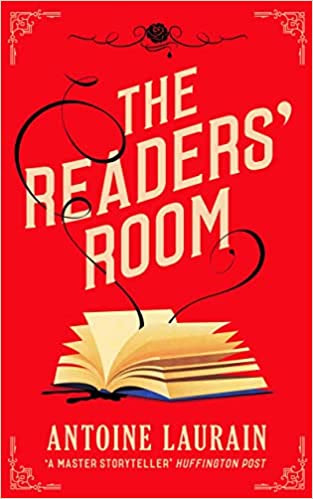
The Readers' Room by Antoine Laurain, translated by Jane Aitken, Emily Boyce and Polly Mackintosh

This short novel was one I picked up because I enjoyed his Vintage 1954 book. This one is also set mostly in Paris and revolves around a small unnamed publishing house, and its Head of Manuscript Services, Violaine Lepage. Violaine is in charge of the readers' room, a group of people who read the manuscripts sent in and determine if they are worth moving forward with. They classify the books using three symbols. A square indicates rejection. A crescent moon means it is promising. A sun means that they should publish.
The book opens with Violaine waking in a dark room, and seeing various figures around here. We soon discover that she is in a hospital room and later learn why. 
The firm has recently taken on a new book by a new author. The book is called Sugar Flowers and the author's name is Camille Deséncres. It is a book that caught their attention at first reading, and was given a sun symbol. The negotiation for the contract with the author was all done via email, and now the book is on the shortlist for the Prix Goncourt, one of France's biggest literary awards. But the publishing house has a potential problem regarding the author.
Alongside this part of the story is another one, this one involving Sophie Tanche a police detective in Rouen. Some crimes have been committed there that bear a strong resemblance to ones in Sugar Flowers and Tanche wants to know more about the author as part of her investigation. 
Through the course of the novel we learn Violaine's backstory, how she came to be in her position, how she met her husband, her shrink Pierre Stein, and the recent developments as a result of her accident. 
We also learn about some of the members of the Readers' Room, like Beatrice who is blind, and Marie, the newest member. 
This is a novel with a unique plot and some interesting quirks. Set in a world of books and authors, it also has strong influences from the world around it. There is a lot packed into these few pages. A book that is hard to put down. 

Sunday, 17 April 2022

Lucy Checks In

Finished April 4
Lucy Checks In by Dee Ernst

This is another winning romance book with a smart woman as the central character. Lucy (Lucia) Giannetti has worked in hotels for years. She knows how they work inside out and has worked at many across North America. But her last job ended in a very surprising way when the hotel owner, who she was also romantically involved with, disappeared with a lot of money, including the employee pension fund. Due to her position, and her relationship, Lucy ended up in a legal fight to defend herself and found herself without a job, back living with her parents. 
Two years later, and finally cleared of all wrongdoing, she knows she can't continue living with her parents, although she's enjoyed spending time with her young nieces, and so when she is offered a job to renovate and manage a hotel in Rennes, France, she jumps at it. 
When she gets there she finds the situation different than what she expected. The house hasn't been used as a hotel in decades, and is sadly rundown. There is no money for workers, so Lucy must take on much of the work herself, from painting rooms to building a website. And not all of the long term residents of the Hotel Paradis are on board. 
As she finds herself working harder than she's ever worked before, she is buoyed by the support of her best friend back home, the changes that she can see in the hotel, and the enthusiasm of the elderly owner. She also finds herself strangely attracted to Bing, the artist and children's book illustrator who lives in the attic. 
This is a story of a woman getting a second chance at her career, calling on all her knowledge and skills to make a go of it, and also finding that maybe she also has a chance at love, if she can trust a man again. 
I loved the character of Lucy, in her late 40s and setting out on an adventure more ambitious than she imagined. She's worried about family back home, about whether she can make the hotel a success, and about recovering her reputation. Many of the other characters at the hotel were equally interesting from the elderly man who loves to garden to the young woman in a marriage that seems rocky. 
I really like these romance books featuring older women, with experience and smarts. 
The setting of Rennes, France is brought to life through the plot, as is the atmosphere of the hotel. 
A great read. 

Monday, 25 October 2021

The Night Gate

Finished October 24
The Night Gate by Peter May

This novel is part of the Enzo Files series and Enzo Macleod is now retired from his job in the  French police as a forensics expert. He has been asked by colleagues to take a look at the site of recently discovered body, buried years ago in a small cemetery. The body came to light when a tree was uprooted during a storm, and was found tangled among its roots. The skull shows that the man had been shot through the head. It would appear that the body has been there for decades, dating back to World War II. 
As Enzo inspects the site, he notices police activity at a house nearby and a police officer, recognizing him, approaches and asks for his opinion on the murder that occured in that house. 
Set in the fall of 2020, this is the first novel that I've read that is set during the pandemic, and I found it interesting how that figured into the action of the novel. 
As Enzo looks at both the historical murder and the contemporary one, he finds an unexpected link between the two, France's most famous painting, the Mona Lisa. With the assistance of some family members, he travels to Paris and to Germany in search of the story behind these deaths.
We also see into Enzo's personal life, his wife, his children from previous wives and relationships, and his interactions with them. 
With some of the action focused on the characters from the war, we see a young Frenchwoman, tasked with keeping the painting safe during the occupation, and two men determined to get ahold of it for their own purposes. 
This is the second book I've read in the series, and I found it quite interesting. 

Wednesday, 15 September 2021

The Librarian of Saint-Malo

Finished September 13 
The Librarian of Saint-Malo by Mario Escobar, translated by Gretchen Abernathy

Set during the Second World War, the book is focused on Jocelyn Ferrec who has recently been hired to run the town library. But she has bad luck. After getting engaged to be married, she has contracted tuberculosis and her health is affected. She gets married anyway, but her wedding day is the day that Germany invades Poland, and war will eventually come to her as well. 
Jocelyn tells her tale through letters to a famous French author that she admires, Marcel Dumas, and sends them to him by private courier when she can manage it. Somehow this makes her feel better even when her situation is dire.
From German occupation to threats against her person and the books she cares so much about, Jocelyn must fight where she can, take action where she can do so, and try to hide the books she fears will be destroyed or plundered. 
Besides Jocelyn, there is Celine, the librarian that Jocelyn took over from, her bookseller friend Denis, the local doctor and other neighbours. Some seem eager to cooperate with the Germans, others find ways to make trouble for them. Jocelyn, while she believes strongly in the power of books, doesn't believe that her friends lives are worth more than them. 
This was an interesting premise of a story, but it didn't grab me like I expected. Thinking about it, I found that it had action and drama, with the characters displaying lots of emotion, but it lacked depth. The ease of movement of some of the characters seemed unlikely, and many things weren't explained very well. I think there are many better books about this time period in the genre. 

Tuesday, 31 August 2021

The Only Girl in the World

Finished August 30
The Only Girl in the World: a memoir by Maude Julien with Ursula Gauthier, translated by Adriana Hunter

This memoir is a dark tale of a girl raised by a autocratic father that thought he was superior and who chose his future wife when she was herself a young girl, raising her to be able to educate a child to the purpose he envisioned, being a future world leader able to survive difficult situations. He had been active in the Resistance in World War II, and was a member of a secretive Freemason group. 
His war experience led him to ensure his daughter was able to do several things: sit for hours without moving; not let her feelings show through any facial expressions; navigate in the dark under time constraints; and have the skills to make it through concentration camps.
For the first, he began by having her sit still in his presence, but soon had her sit on a stool in the dark cellar, where there were rats, with bells on her clothing so he could tell if she moved. He trained her to keep her emotions, including preferences to herself, letting nothing show on her face, and making choices quickly to not give away weakness. He structured her entire day with tasks and lessons, having her work with laborers he hired to build things, look after the few animals on their property, assist in butchering animals for meat, and attend his every need. Her food intake was controlled, and often her bread was left to go deliberately stale before she was allowed to eat it. She had no medical or dental care, but had strange scars on her body that she still doesn't know the origin of. 
He had seen that musicians were often kept from death in the concentration camps and so had her learn multiple musical instruments including piano, accordion, violin, and drums. This became one of her comforts in life. She also took comfort in the animals on the property, trying to take time to show them love when she could. 
Her mother, under her father's power from a young age, participated in the control enacted on her, exacting punishments and showing resentment on her as well. But from time to time, her mother also spoke against her father, with Maude afraid to agree lest it be used against her later. 
It was through the influence of a music instructor that Maude was eventually able to leave her father's home, and begin to make a life for herself, but it took years for her to find appropriate therapy and begin to deal with the issues created by her strange upbringing.
Her father seems to be both selfish and delusional, but ultimately a weak man. But he made her life full of constant fear and I am glad that she was able to escape and now life a good life. 

Friday, 4 June 2021

French Dirt

Finished May 30
French Dirt: The Story of a Garden in the South of France by Richard Goodman

This book is about the time the author spent in a small village in southern France. It was a twelve month period, where he and his girlfriend rented a large stone house (owned by an American couple who had renovated what had previously been a silkworm nursery). He had planned for several months in advance to budget enough money to afford to do this, and they were watching their money carefully. 
At first, they walk around the village and surrounding area, and watch the people, and then they begin to reach out to their neighbours and ask questions and learn about things. 
Richard gets to know the man, Jules, who will help him make a garden of his own (the first he's ever had) when he trades his labour for firewood for the winter. The area is one of many vineyards, most of which get made into supermarket wine, and the wood he gets is mostly old vines, which suit the purpose admirably. His labour is in one of these vineyards, clearing out stones and other impediments to the vines with a group of local farmers. Richard spent his life in large American cities mostly in apartments where he didn't have an opportunity to garden, but he'd been interested since he was a child following his grandmother's gardener around when she visited his parents home near the ocean in the summer. He is in his forties when he has this experience, but it made a huge impact on his life. He changed the name of the village to protect the privacy of the villagers he became friends with over the year, many of whom he remains friends with still.
His Dutch girlfriend Igminia plays a minor role here, and it seems that their relationship didn't last much longer, but the focus of the book is on the village and the garden. He talks about the house, the village, the people that he met while living there, and the garden he created. You definitely get a good sense of the amount of work he put into the garden, visiting it twice daily and spending several hours there. He mostly borrowed the tools he needed, and he had to haul water from a nearby stream, and later, during the hottest part of the summer in August, had to borrow water storage containers and pump water into them from a river with the help of Jules. He asks for advice from his new friends, watches them garden, and works in local gardens as well. 
You can see the love his has for this activity and its results. I really enjoyed this book.